Not all Quebec records count for Canadian citizenship by descent: The 1994 rule every applicant should know about

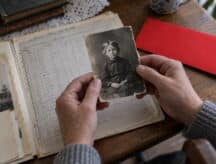
Somewhere in a house in Lewiston, Maine, there is a folder.
Inside it sits a Quebec birth certificate. Someone's mother ordered it in 1987, when a passport application needed proof of where her father was born. It carries a seal and a signature. It has sat in that folder ever since, waiting for the day someone would need it.
That day has arrived, and the certificate will not work, and it is not because the document is not relevant. The problem is the year the province printed it.
Get a Free Consultation on Applying for Canadian Citizenship by Descent
The rule
Immigration, Refugees and Citizenship Canada (IRCC) does not accept birth certificates or marriage certificates issued by the province of Quebec before January 1, 1994.
IRCC's guide for citizenship certificate applications states this directly, and its officers are instructed to turn those documents away.
A pre-1994 certificate leaves a gap in your paperwork rather than a flaw in your claim. Filling that gap before you file costs less than filling it after.
For those assembling a citizenship by descent application, it is worthwhile to check when their Quebec paperwork was printed before reading a word of what it says.
The date that matters is the print date
IRCC looks at one thing on your Quebec document: when the issuing office printed it.
A birth certificate the province printed in 1987 fails, whatever it says. A document issued this year describing an event from 1782 does not fail on that ground, because it came off the printer after the cutoff.
Applicants read the rule backwards in both directions. Some assume their family's oldest records have aged out of usefulness. Others assume a certificate from the 1980s is recent enough to pass. The year your ancestor was born has no bearing on either question.
This distinction dictates what you do next. When your Quebec document was printed before 1994, you are not looking for the certificate someone in your family already has. You ask a Quebec office to produce a new one from the original entry, today.
What to do if your document predates 1994
Simply put, you must order a new document; however, which office you order from depends on how old the event is, not on the 1994 rule.
Quebec splits its civil records at a rolling 100-year line. Two offices hold them.
The Directeur de l'état civil (DEC) holds records from less than 100 years ago to the present. This covers more than post-1994 events. Before the reform, each parish deposited a civil copy of its register with the local court, and the DEC now administers that material for the past century. A birth from 1955 or a marriage from 1980 is a DEC request, even though both predate 1994. The DEC issues a current certificate or copy of an act, and that document satisfies the 1994 rule because the DEC prints it today.
Bibliothèque et Archives nationales du Québec (BAnQ) holds records more than 100 years old, back to 1621. For an event that old, BAnQ produces a certified reproduction of the original act.
One quirk catches applicants at the BAnQ end. For a birth in that older period, BAnQ will not send you a birth certificate. Quebec registered births only in parish and municipal registers before 1994, so what BAnQ issues is a certified copy of the baptismal act, taken from the parish register. For that period, the baptismal act is the record.
So the routing is straightforward once you date the event. Within the last 100 years, you go to the DEC. Older than that, you go to BAnQ. The 1994 rule decides whether the certificate in your folder still works; the 100-year line decides which office replaces it.
If you do not have the details you need to order, you can confirm them first. BAnQ numérique holds digitized images you can search without paying. The Programme de recherche en démographie historique at the Université de Montréal has indexed Catholic parish records up to 1849. The Drouin Collection, available through Ancestry, FamilySearch, and GenealogyQuebec, holds digitized images of Quebec parish registers.
Any of these will confirm the parish, the date, the act number, and the names of the people involved.
For information on contact details and ordering steps for both offices, visit our dedicated webpage.
Hiring a knowledgeable citizenship by descent lawyer can greatly reduce friction when gathering documents. Some Quebec-based immigration law firms can even order documents from the DEC for you, depending on your circumstances.
Get a Free Consultation on Applying for Proof of Canadian Citizenship
One practical note that IRCC's guidance does not cover: Quebec parish records spell the same surname several ways across generations. You will find "dit" names, where a family used a nickname alongside its formal surname. You will find French names written in English. Quebec genealogists treat these variations as ordinary, and they do not make a record invalid.
Why does this rule exist?
Quebec had no central civil register until 1994.
For more than 350 years, parish priests kept the province's vital records. A priest entered each birth as a baptism, by hand, in the parish register. He recorded marriages and burials the same way. A duplicate went to the local courthouse. That system ran from the earliest French settlements in the 1620s through to the end of the twentieth century, with the parish serving as the registry office.
Those registers followed families out of the province as well. Priests recorded the baptisms of the hundreds of thousands who left for the mills of New England in the same ledgers, generations before their descendants went looking for the entries.
Quebec's civil-status reform took effect on January 1, 1994, and created the centralized register the DEC administers today. IRCC set its cutoff on that date.
The same history explains why Quebec's records run so deep. A province that recorded four centuries of births in parish ledgers left behind one of the most complete genealogical archives in North America.
Quebec is one link in a longer chain
Quebec rarely accounts for the whole application.
IRCC requires proof of parentage at every generation between you and your Canadian ancestor. A claim through a great-grandparent can call for roughly eight birth certificates, pulled from several jurisdictions—each with its own rules about what it releases and to whom.
Thousands of other applicants are working through the same archives. BAnQ's Montreal office received 32 requests for reproductions in January 2025. By January 2026, that number had passed 1,000.
The folder is still worth opening
Go back to that certificate in Lewiston.
IRCC will not accept it. But it names the parish, the date, and the people, which gives the archive what it needs to locate the original entry.
You cannot submit it as proof, but you can follow it to the record.
You can start with CanadaVisa's citizenship by descent eligibility checker if you are not yet sure your family line qualifies, then begin ordering records.
Get a Free Consultation on Applying for Proof of Canadian Citizenship
- Do you need Canadian immigration assistance? Contact the Contact Cohen Immigration Law firm by completing our form
- Send us your feedback or your non-legal assistance questions by emailing us at media@canadavisa.com