Express Entry: Canada holds first draw of 2022


Canada is starting the new year inviting 392 Express Entry candidates to apply for permanent residence.
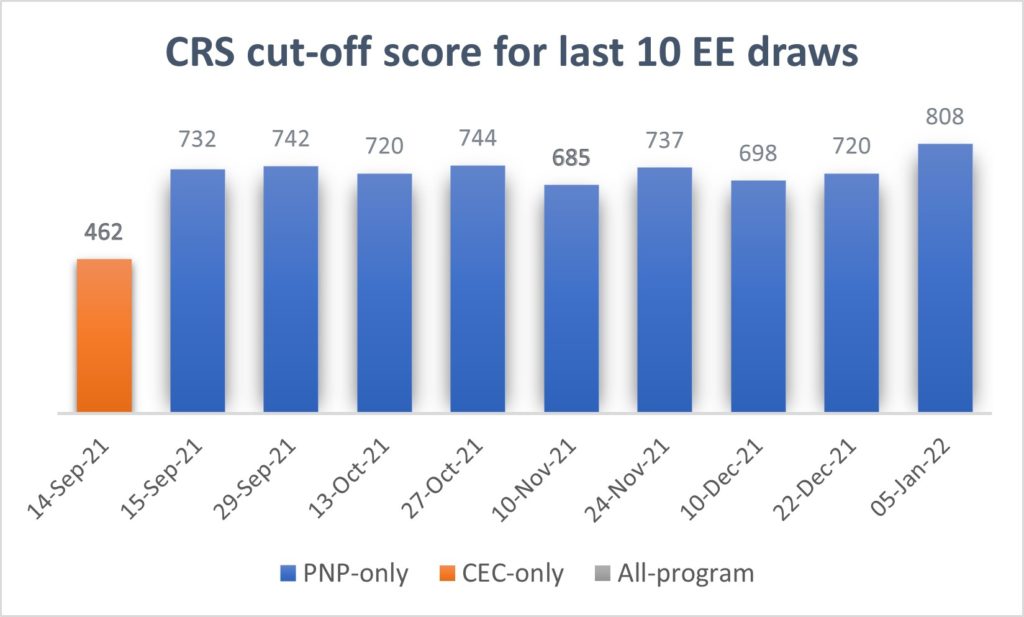
In the January 5 draw, Immigration, Refugees and Citizenship Canada (IRCC) only invited Provincial Nominee Program (PNP) candidates. The Comprehensive Ranking System (CRS) score cutoff was 808. PNP candidates get an automatic 600 points added to their score when they receive their nomination, which is why the score seems high compared to other invitation rounds.
IRCC has only been holding PNP draws since September. According to an internal briefing memo, IRCC has been focusing on PNP candidates as immigration officers are processing a backlog in applications. The immigration department wants to cut Express Entry backlogs in at least half before inviting candidates from other programs.
Get a Free Express Entry Assessment
New year, new Express Entry
The Canadian government has suggested that they plan to make changes to Express Entry this year. In the 2021 federal budget, the Liberal government proposed to give the immigration minister more flexibility to invite Express Entry candidates that meet Canada’s labour market needs. Later in the year, Prime Minister Justin Trudeau asked Immigration Minister Sean Fraser in a mandate letter to expand permanent residence pathways for international students and temporary foreign workers via Express Entry. At this time, no further details have been released publicly.
Also, Express Entry-eligible occupations may change when the new Training, Education, Experience and Responsibilities (TEER) system comes into effect, and replaces the current National Occupational Classification (NOC) skill levels. For now, Express Entry only recognizes work experience from NOC 0, A, and B occupations. This type of classification will be changed when TEER comes into force in late 2022.
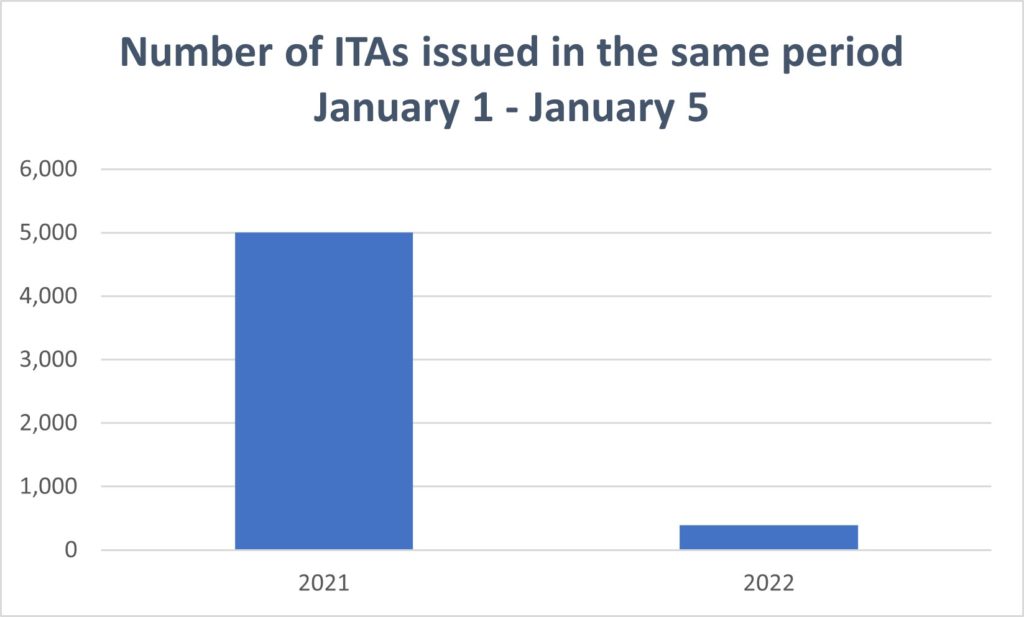
Canada only held program-specific Express Entry draws for PNP and Canadian Experience Class (CEC) candidates in 2021. It was the first year in the history of Express Entry that no Federal Skilled Worker Program (FSWP) candidate was invited to apply. Before the pandemic, FSWP candidates were the main source of Express Entry immigrants.
FSWP candidates are more likely to be applying from outside of the country, compared to PNP or CEC candidates. Last year, IRCC focused more on admitting applicants who were already in Canada due to travel restrictions. CEC candidates are most likely to be in Canada already, since they are required to have at least one year of Canadian work experience. PNP candidates are already nominated for immigration by the provinces, which means they have demonstrated that they can help support regional labour markets.
What is Express Entry?
Express Entry is the application management system three Canadian immigration programs: the Canadian Experience Class, the Federal Skilled Worker Program, and the Federal Skilled Trades Program. PNP candidates in the Express Entry pool have already qualified for one of these programs.
Express Entry uses a points-based system, the Comprehensive Ranking System (CRS), to rank candidates’ profiles. The top-scoring candidates receive an Invitation to Apply (ITA), and can then apply for permanent residency.
Next, an IRCC officer reviews their application and makes a decision. After that, they will ask for biometrics and may set up an interview or request more documents.
If the application is approved, IRCC issues a Confirmation of Permanent Residence (COPR). Approved permanent residents can then complete the landing process. If they are outside Canada, they can access pre-arrival services to help them with the first steps for settling in Canada.
Who was invited?
The following is a hypothetical example of someone who may have received an ITA in the new Express Entry draw.
Julia is 34 with a Master’s degree and has been working as a database analyst for ten years. She wrote the IELTS and scored a 7.5 in listening and a 6.5 in every other category. She has never worked or studied in Canada. Julia entered the Express Entry pool and also submitted a profile to the Canadian province of Manitoba. She entered the Express Entry pool with a CRS score of 360. Shortly after submitting a profile to Manitoba, Julia was invited to apply for provincial nomination. After being nominated, her Express Entry CRS score increased to 960 and Julia received an Invitation to Apply for permanent residence in the new Express Entry draw.
Get a Free Express Entry Assessment
© CIC News All Rights Reserved. Visit CanadaVisa.com to discover your Canadian immigration options.

- Do you need Canadian immigration assistance? Contact the Contact Cohen Immigration Law firm by completing our form
- Send us your feedback or your non-legal assistance questions by emailing us at media@canadavisa.com