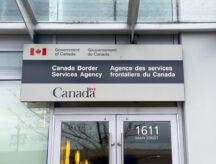
Understanding why some people might not be allowed in Canada and ways to overcome inadmissibility

When someone is inadmissible to Canada, it is because the examining officer has decided that the person being assessed is or will be a threat to, or burden on, public health and/or safety.
There are many intricacies to the concept of inadmissibility but on a basic level, inadmissibility falls under a few general categories, including medical/health and criminal.
Schedule a Free Legal Consultation with the Cohen Immigration Law Firm
Medical inadmissibility occurs when an individual is considered a danger to public health, a threat to public safety, or someone who will place excessive demand on health and social services.
- Danger to public health: Using medical exam results and health history, a determination will be made about whether the individual’s health condition will endanger public health
- Danger to public safety: After assessing an individual’s potential for sudden mental or physical incapacity as well as their risk of unpredictable or violent behaviour, officers will decide whether they should be deemed a public safety threat due to their health
- Excessive demand for health/social services: If inadmissible under this provision, it will have been decided that the person’s health condition will strain these services by negatively affecting service wait times or requiring excessive spending because “the services needed to treat and manage the health condition would likely cost more than the excessive demand cost threshold”
Note: According to the Canadian government, the 2022 excessive demand cost threshold was $24,057 per year ($120,285 over five years)
Criminal inadmissibility occurs in situations where an individual has committed an act outside Canada that is an offence in both the country in which it took place and in Canada. Being criminally inadmissible to Canada could also mean that the person in question committed two or more crimes that are ‘summary’ offences in Canada. In both cases, the only requirement for an inadmissibility decision is credible evidence of wrongdoing.
Although inadmissibility to Canada is most often caused by the foreign equivalent of a Canadian Criminal Code infraction, a foreign offence that violates any Canadian federal law can also result in inadmissibility.
Overcoming criminal convictions and inadmissibility to Canada
Beyond an inadmissibility hearing, there are several ways for a foreign national to overcome a criminal conviction and enter Canada.
Deemed rehabilitation
If the examining immigration officer is convinced that enough time has passed since the foreign national in question was convicted of their crime that they are now rehabilitated, the individual may be allowed back into Canada.
It is important to note that deemed rehabilitation is assessed on a case-by-case basis depending on the crime that was committed, the amount of time that has passed since the individual finished serving their sentence for the crime and whether the person has committed more than one crime.
Deemed rehabilitation is also only applicable if the crime committed outside of Canada would carry a prison term of fewer than 10 years if it were to be committed within Canadian borders.
Individual rehabilitation
Individual rehabilitation requires the foreign national to meet the outlined criteria for rehabilitation and be considered highly unlikely to commit further crimes.
Note: Five years must have passed since the day that the foreign national committed the crime that made them inadmissible to Canada to apply for individual rehabilitation. Likewise, it must have been at least five years since the completion of the individual’s criminal sentence (including probation).
Record suspension/discharge
Formerly known as a pardon, a record suspension from the Parole Board of Canada would make the foreign national no longer inadmissible to Canada. Record suspensions/discharges received in other countries may also be valid in Canada.
Legal opinion letter
A legal opinion letter can aid foreign nationals attempting to enter Canada by allowing a lawyer to speak on their behalf, explaining to an immigration or border services officer why the foreign national is not actually inadmissible to Canada.
Offering a legal analysis of the foreign national’s crime in the context of Canadian law, these letters can help convince examining officers that the individual should be admissible to this country despite their criminal history.
Temporary Resident Permit
A Temporary Resident Permit (TRP) allows foreign nationals to enter or stay in Canada if they have valid reasons to be in the country.
TRPs are provided at the discretion of the examining immigration or border services officer, who must feel confident that an individual’s reason to enter or stay in Canada outweighs the health or safety risks to Canadians. Accordingly, TRPs can be cancelled by an officer at any time.
What are my options?
Inadmissibility may be a confusing part of the Canadian immigration landscape. Therefore, it could be beneficial to consult with an experienced Canadian immigration lawyer to discuss the options and potential remedies available to people who are inadmissible to this country.
An experienced immigration lawyer can:
- Help prepare a TRP and/or Rehabilitation applications
- Provide a legal opinion letter
- Ensure applicants avoid mistakes
- Respond on an applicant’s behalf to the Canadian government
- Use their expertise to avoid unnecessary delays throughout the different application steps and application processing
Schedule a Free Legal Consultation with the Cohen Immigration Law Firm
© CIC News All Rights Reserved. Discover your Canadian immigration options at CanadaVisa.com.
- Do you need Canadian immigration assistance? Contact the Contact Cohen Immigration Law firm by completing our form
- Send us your feedback or your non-legal assistance questions by emailing us at media@canadavisa.com