PEI needs to attract more francophone immigrants to meet growing labour needs

Pour lire cet article en français, cliquez ici.
A francophone economic development group from Prince Edward Island (PEI) has produced a series of information booklets aimed at attracting French-speaking immigrants.
The Réseau de développement économique et d’employabilité (RDÉE) put together eight booklets containing pertinent information about PEI’s economic and francophone landscape.
The main booklet titled: ‘Opportunity Awaits: Attracting Francophone immigrants to Prince Edward Island’ talks about the importance of francophone immigration for the province’s culture and economy.
PEI is facing the same problems with an aging population as the rest of Canada, and the booklet suggests that promoting francophone immigration is a possible solution.
“Many of the Island’s important industries need bilingual (French and English) workers and there is a growing need for new entrepreneurs,” the booklet says. “In addition to economic opportunities, immigrants who settle on Prince Edward Island benefit from an excellent quality of life.”
A Statistics Canada table found in the booklet shows that PEI had a population growth rate of six per cent between 2015 and 2018— the fastest rate in Canada during that time period.
These findings are congruent with an Atlantic Provinces Economic Council (APEC) report that said international immigration was “the biggest contributor” to PEI’s population growth. Between 2016 and 2018 PEI recorded the largest number of new immigrants relative to the size of its population, the report said.
In recent years, PEI hasn’t been able to attract many French-speaking immigrants “[o]f the more than 10,000 immigrants living on the Island, only 225 speak French.”
While 34 percent of PEI's population is over the age of 55, more than 51 per cent of francophones living in the province are in that age group. Attracting more Francophones would help strengthen that community.
The booklet later claims that immigrants who can speak both French and English earn an average of 15 per cent more annual income than unilingual workers.
Find out if you are eligible for any Canadian immigration programs
Industry and demographics
The remaining seven booklets contain demographic information and economic data on the regions within PEI as well as the province as a whole.
The top five industries in all of PEI are:
- Health care and social assistance
- Retail trade
- Public administration
- Agriculture, forestry, fishing
- Manufacturing
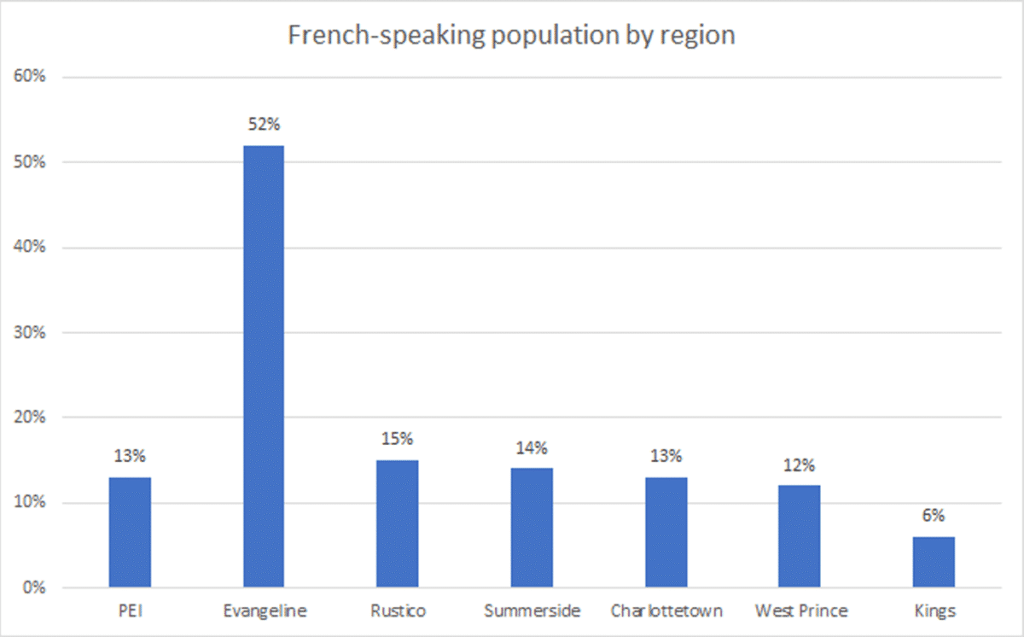
With 13 per cent of the population speaking French, PEI is the province with the third-highest concentration of French-speakers in Canada, following behind Quebec, and New Brunswick.
Within the province of PEI, the area with the highest concentration of French-speakers is the Evangeline region at 52 per cent.
All of the booklets are available in print and digital formats. They can be downloaded from the RDÉE’s webpage.
Find out if you are eligible for any Canadian immigration programs
© 2019 CIC News All Rights Reserved

- Do you need Canadian immigration assistance? Contact the Contact Cohen Immigration Law firm by completing our form
- Send us your feedback or your non-legal assistance questions by emailing us at media@canadavisa.com