Sending kids to school in Canada from the U.S. amid travel restrictions


U.S. parents who send their kids to school in Canada have to navigate the travel restrictions that are now in place for another month.
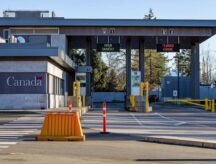
Canada has extended border restrictions on U.S. travellers until September 21, which is weeks after classes are set to start across the country.
U.S. parents are facing prolonged processing delays this year as Immigration, Refugees and Citizenship Canada (IRCC) works to process a large backlog of study permit applications. Online application processing for new study permits is currently estimated to take about 20 weeks, according to the IRCC webpage.
Under normal circumstances, eligible students could get their study permits immediately at land border crossings or at the port of entry of an airport. But since travel restrictions were implemented in March of this year, travel to Canada for a discretionary or optional reason is not permitted— which includes travelling to ports of entry for the purposes of making an immigration application.
Find out if you are eligible for any Canadian immigration programs
However, Canadian Border Services Agency (CBSA) told CIC News that students who enter Canada from the U.S. may still be able to get their permits immediately at a port of entry, as long as they can establish that they are coming to Canada for an essential reason.
“Students who enter Canada from the U.S. may apply for their study permit upon entry to Canada, however, they must still demonstrate that their travel to Canada is not for an optional or discretionary purpose,” CBSA said in an email. “Students who can complete their studies online are encouraged to remain in their home country. The onus is on the student to demonstrate that their presence in Canada is required.”
Coming to Canada to study is still considered to be discretionary or optional unless the student needs to be in the country to complete their studies. As such, U.S. students may be granted study permits at ports of entry if they meet the usual study permit application requirements and can show the border services officer that they need to be in Canada to carry out their studies. They could do this by including a letter from their school saying that their in-person presence is essential to the program, for example, or that it is impossible to complete the program remotely.
U.S. students who do come to Canada will also have to quarantine themselves for two weeks, and they will have to satisfy the border officer that they have a suitable quarantine plan. In all cases, the final decision is at the discretion of the border officer.
Parents will have to have their own essential reason and quarantine plan to make a case for themselves to accompany their children to their residence while in Canada.
CBSA said that people who are driving students to their Canadian institutions will “generally be considered as travelling for a discretionary or optional purpose of travel, meaning they may be denied entry.” The spokesperson also said that the parents, or drivers, may be denied entry if they cannot comply with the mandatory quarantine requirements.
Travel restrictions between Canada and the U.S. will be reviewed within the next month.
Find out if you are eligible for any Canadian immigration programs
© 2020 CIC News All Rights Reserved

- Do you need Canadian immigration assistance? Contact the Contact Cohen Immigration Law firm by completing our form
- Send us your feedback or your non-legal assistance questions by emailing us at media@canadavisa.com