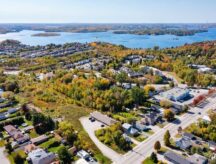
Buying a home in Canada as a non-Canadian

The Prohibition on the Purchase of Residential Property by Non-Canadians Act was passed in parliament in June 2022 and came into effect on January 1 this year.
Broadly speaking, the new regulations will prohibit the purchase of a residential property by any foreign investor who is not a Canadian citizen or permanent resident. The regulations will last two years and then be automatically cancelled.
The Act specifically prohibits foreign commercial enterprises and people who are not Canadian citizens or permanent residents from acquiring non-recreational, residential property in Canada.
Residential property includes detached homes or similar buildings, semi-detached houses, rowhouse units, residential condominium units and other similar premises.
Discover if You Are Eligible for Canadian Immigration
The government introduced the Act in Budget 2022 as part of Canada’s strategy to reduce the cost of housing, which has escalated in recent years.
Data from the Canadian Real Estate Association (CREA) shows the average price of a home spiked in February 2022 at $816,720. It has since dropped to $632,802 as of November 2022. Still, this is considered a high price that renders home ownership out of the question for many as the average Canadian income was $58,800 in 2021.
The government has cited foreign investors buying homes in Canada, while never actually living in them, as a driving force in the rising prices for residential homes.
What are the exceptions?
The new Act is not a blanket ban on buying properties by foreign investors. They are still allowed to purchase recreational properties such as cottages and vacation homes. Properties that contain more than three separate units are also exempt.
Additionally, the Act does not include homes that are outside census metropolitan areas (cities with populations higher than 100,000).
There are also exceptions for non-Canadians who purchase a home with a Canadian spouse or common-law partner who later finds themselves in a transitional situation, such as a divorce, or any non-Canadian who inherits a home following a death.
Can temporary residents buy a home in Canada?
The Act does not apply to Canadian citizens or permanent residents. Temporary residents, those on valid study or work permits, are also still eligible to purchase a home in Canada. However, there are several conditions for temporary residents as the government requires proof of intent to become a permanent resident and settle.
For example, a person who is enrolled in a program of authorized study at a Canadian designated learning institution must meet at least one of the following criteria:
- they filed all required income tax returns under the Income Tax Act for each of the five taxation years preceding the year in which the purchase was made,
- they were physically present in Canada for a minimum of 244 days in each of the five calendar years preceding the year in which the purchase was made,
- the purchase price of the residential property does not exceed $500,000, and
- they have not purchased more than one residential property
This means that anyone in Canada on a study permit who wants to buy a home must be able to prove they were in the country for 244 days each year for the past five years before making the purchase. They also require proof of filing tax returns in Canada for the same period.
It is also important to note the $500,000 maximum purchase price for a home is probably not enough to buy a home in Ontario or British Columbia where the average house price still exceeds $800,000 and the housing crisis is most acute.
Those who are in Canada on a valid work permit also have conditions they must meet such as:
- they worked in Canada for a minimum period of three years within the four years preceding the year in which the purchase was made, if the work is full-time work as defined in subsection 73(1) of the Immigration and Refugee Protection Regulations, (IRPA).
- they filed all required income tax returns under the Income Tax Act for a minimum of three of the four taxation years preceding the year in which the purchase was made, and
- they have not purchased more than one residential property.
In this instance, the time spent in Canada is less than for those who are studying but work permit holders must still show at least three years of full-time work and tax returns over the preceding four years.
The Act also says the non-Canadian is responsible to demonstrate their eligibility to the Canadian realtor. Temporary residents are responsible for all the costs involved in obtaining proof of eligibility such as retrieving documentation regarding work permits and notices of assessment. They may also need documents to demonstrate a physical presence in Canada such as a rental agreement, utility bills or entry and exit records into Canada.
What are the penalties?
A foreign investor that finds a way to purchase a prohibited residential property in Canada, or anyone who knowingly assists them, will have committed an offence and will be liable for a fine of up to $10,000. Additionally, the superior court of the province in which the property is situated may order that the property be sold.

- Do you need Canadian immigration assistance? Contact the Contact Cohen Immigration Law firm by completing our form
- Send us your feedback or your non-legal assistance questions by emailing us at media@canadavisa.com