Work and Study Permit holders see huge gains in employment, as strong hiring continues in Canada

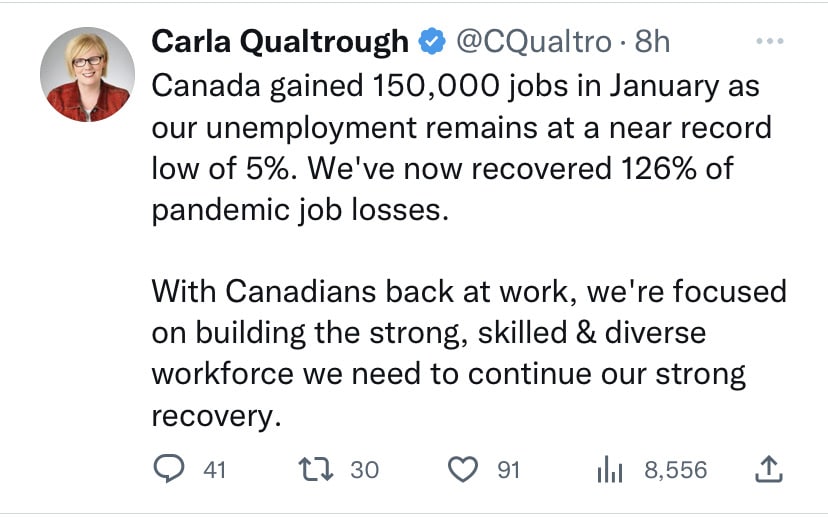
January saw a considerable increase in overall employment, as 150,000 jobs (+5% of total employment) across Canada were filled in the first month of 2023.
Learn more about Canadian immigration and discover your options
The strong surge in hiring yielded big increases in employment for many groups (primarily workers aged 25-54), with Non-permanent Residents (NPRs)—those holding either a Study or Work Permit)—seeing significant increases in labour force engagement.
The national unemployment rate held at a historically low 5%; little changed from December 2022. Immigrants in Canada held an average unemployment rate of 5.96% at the end of 2022, reflecting the wealth of job opportunities in Canada.
In January, NPRs filled 79,000 positions. As of November 2023, international students in Canada who hold a valid study permit can now work an unlimited number of hours during school semesters, until December 31st, 2023—likely a contributor to this increase. In conjunction with NPRs now making up the biggest proportion of Canada’s population ever (per the latest census data), they now have record participation in the labour force as well.
What industries were NPRs hired in?
The increases in NPR employment were reflected in multiple areas. The industries that saw the greatest increases were:
- Professional, scientific, and technical services (+10,349 people hired);
- Retail trade (+9,717 people hired);
- Accommodation and food services (+8,848 people hired); and
- Health care and social assistance (+7742 people hired).
Overall, this group now makes up 3.4% of total employment, underlying their importance to the Canadian labour market. November’s job vacancy report (the latest report at the time of writing) showed a gradual decrease in overall vacancies, however three of the above industries (excluding retail trade) continue to have an elevated number of open positions, and a persistent need for workers.
What industries saw strong hiring gains in January, and are there still jobs in these industries?
The first month of 2023 saw strong hiring gains in the:
- Wholesale and retail trade (59,000 jobs filled, hiring for 128,960 vacancies collectively);
- Health care and social assistance (40,000 jobs filled, hiring for 131,775 vacancies);
- Educational services (18,000 jobs filled, hiring for 20,180 vacancies);
- Construction (16,000 jobs filled, hiring for 79,025 vacancies); and
- Other services (16,000 jobs filled, hiring for 34,985 vacancies).
Additionally, employment decreased by 17,000 positions in the transportation and warehousing industry, currently hiring for 46,635 vacancies. Workers in Canada now hold a national average wage of $33.01 CAD/hour—however average purchasing power has taken a hit in Canada, as wage growth remains slower than increasing inflationary pressures seen with the Bank of Canada raising interest rates at the start of February.
Note that all vacancy figures are taken from the November 2022 job vacancy report and adjusted for seasonality.
Many of the above industries report pressing and continuous job vacancies. For example, construction was one of the few industries that saw an increase in vacancies in November. Meanwhile a lack of healthcare workers continues to be a concern for Canada, as the country seeks to fill the persistent labour shortages that have plagued this industry since the start of the COVID-19 pandemic.
The gravity of this situation is reflected in policy changes the government has made. Immigration accounts for nearly 100% of growth in the Canadian labour force; and as such Canada has made it easier for temporary foreign health care workers to immigrate and work in Canada—extending these measures to workers in caregiver pilot programs as well. In parallel Canada has extended immigration options for out-of-status construction workers, in a bid to maximize its workforce at home.
Which provinces saw the greatest increases in hiring?
In January, the provinces that experienced the greatest increases in hiring included:
- Ontario (+63,000 positions filled);
- Quebec (+47,000 positions filled);
- Alberta (+21,000 positions filled);
- Nova Scotia (+9,400 positions filled); and
- Saskatchewan (4,500 positions filled).
In contrast Newfoundland and Labrador saw an increase in job vacancies as employment decreased by 2,300 positions. Provinces address their specific labour shortages through the Provincial Nominee Programs (PNPs)—which today are the main pathway of economic immigration to Canada.
As the year progresses, job vacancies, specific in-demand occupations, and hiring in each province will help determine the specifics of their PNPs. In fact, Express Entry based programs are also moving towards targeted draws, with in-demand professions being one of the key considerations towards receiving a targeted invitation to apply (ITA) under this policy.
Learn more about Canadian immigration and discover your options
© CIC News All Rights Reserved. Visit CanadaVisa.com to discover your Canadian immigration options.

- Do you need Canadian immigration assistance? Contact the Contact Cohen Immigration Law firm by completing our form
- Send us your feedback or your non-legal assistance questions by emailing us at media@canadavisa.com