Canada’s immigration minister proposes new legislation for Canadian citizenship by descent

Immigration Minister Marc Miller has tabled a bill with Canada’s parliament to allow a first-generation limit to citizenship by descent.
This means that if the bill passes, children of Canadian citizens who were born abroad can pass their citizenship on to their children.
The bill, also known as Bill C-71, An Act to amend the Citizenship Act (2024,) will also “restore citizenship to ‘Lost Canadians’”. These are people who have lost or were never able to gain Canadian citizenship due to previous and outdated legislation.
Schedule a Free Canadian Citizenship Consultation with the Cohen Immigration Law Firm
“The current rules generally restrict citizenship by descent to the first generation, excluding some people who have a genuine connection to Canada,” said the Minister. “This has unacceptable consequences for families and impacts life choices, such as where individuals may choose to live, work, study, or even where to have children and raise a family. These changes aim to be inclusive and protect the value of Canadian citizenship, as we are committed to making the citizenship process as fair and transparent as possible.”
However, the legislation also states that “parents born abroad who have or adopt children also born outside Canada will need to have spent at least 1,095 cumulative days of physical presence in Canada prior to the birth or adoption of their child to pass on citizenship.”
In other words, children born, or adopted, by Canadian citizens born abroad will not be eligible for citizenship if their parents cannot prove that they have lived in Canada for a total of three calendar years before the birth or adoption of their child.
The Minister said more details will be available if the bill passes in parliament and receives royal assent. He did not provide a timeframe for the bill’s approval.
The proposed bill follows a similar decision by the Ontario Superior Court of Justice. Last December, the court declared that the second-generational limit is unconstitutional. The presiding judge ruled that the second-generation cut-off creates a distinction based on national origin because it treats those who are Canadians at birth because they were born in Canada differently from those Canadians who obtained their citizenship by descent on their birth outside of Canada.
The Government of Canada had the option to appeal the ruling but chose not to on the grounds that it agreed that the current law has “unacceptable” consequences for Canadians whose children were born outside the country.
How to get Proof of Citizenship
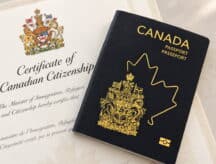
Under the current laws, Canada’s government requires a Canadian citizenship certificate to confirm citizenship status for those born abroad.
Eligible individuals can apply for a Canadian citizenship certificate at any point in their lives. It does not matter if their Canadian parent is living or deceased.
Applicants must prove that at least one of their biological or legal parents was a Canadian citizen at the time of their (the applicant’s) birth.
After Immigration Refugees and Citizenship Canada (IRCC) receives an application, they will issue an “acknowledgement of receipt” and process the application.
According to the latest processing time data available, it can take up to three months for applicants in Canada and the United States, and longer for those in other countries.
Schedule a Free Canadian Citizenship Consultation with the Cohen Immigration Law Firm

- Do you need Canadian immigration assistance? Contact the Contact Cohen Immigration Law firm by completing our form
- Send us your feedback or your non-legal assistance questions by emailing us at media@canadavisa.com