Tens of thousands of Michiganders may be Canadian citizens today, and not yet know it

Few U.S. states share a history as closely entwined with Canada as Michigan.
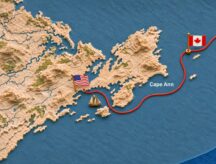
Bordering the province of Ontario, the state has deep ties to its northern neighbour.
As a matter of fact, for decades, Detroit, its most populous city, was a French settlement tied to the fur trade and governed from Quebec, and families whose names still appear on Detroit street signs today trace back to that period.
Get a Free Consultation on Applying for Proof of Canadian Citizenship
A recent change to Canada's citizenship law means Michigan's rich history and proximity to Canada may carry a modern legal consequence: tens of thousands of Michiganders could already hold Canadian citizenship without ever stepping foot there.
What the numbers show
According to the U.S. Census Bureau's 2024 American Community Survey, an estimated 32,000 reported Canadian ancestry and a separate 114,000 reported French-Canadian ancestry, two distinct census categories.
These are self-reported survey estimates, so the real number of Michiganders with a qualifying ancestral link is likely higher still, particularly among those unaware of their own family history.
The reason ancestry now matters more than it used to is Bill C-3, which took effect December 15, 2025, and removed the previous first-generation limit on Canadian citizenship by descent for many people born before that date.
Under the old rules, citizenship generally stopped passing down after one generation born outside Canada. Now, a person born abroad before that date who can trace an unbroken line back to a Canadian ancestor — a grandparent, a great-grandparent, or further back — may also be a Canadian citizen.
Why the numbers are so high
By 1900, Michigan ranked among the top five destination states for Canadian immigrants, alongside Massachusetts, New York, Rhode Island, and Illinois.
There are many factors behind this, primarily close border proximity, and expanding factory work.
For most of the 19th century, the U.S.-Canada border went largely unenforced. U.S. records of arrivals from Canada generally begin in 1895, so earlier movements may be hard to document, meaning someone could travel from Ontario into Michigan, or back again, without an official taking notice.
The rise of the automobile industry also accelerated migration into the state: Henry Ford founded the Ford Motor Company in Detroit in 1903, and General Motors followed in Flint in 1908. Automobile assembly and related manufacturing soon dominated Michigan's economy, drawing waves of immigrants from both Europe and Canada. Many came for land, work, or family already settled on the American side, and simply stayed, blending into Michigan communities without a formal record of where they'd come from.
The Detroit-Windsor crossing, one of the busiest land border crossing between the two countries, has carried that traffic for generations. Michigan's other ports — Port Huron, Bay City, and Sault Ste. Marie among them — saw their own steady flow of arrivals.
Michigan's French-Canadian roots run deeper still. Detroit began as a French settlement in 1701, founded by Antoine de la Mothe Cadillac's expedition out of Montreal. French rule lasted until the British took the city in 1760, but the families who had put down roots stayed, and their descendants remain part of Michigan today.
The state continues to mark that history. In 2016, the Michigan legislature declared a week in late September as French-Canadian Heritage Week, to honour the cultural and economic contributions of French-Canadians in the state.
What this means for eligible Michiganders
Michiganders who can establish a qualifying Canadian ancestral line may now apply for a proof of Canadian citizenship certificate.
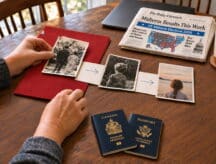
This document confirms their status and opens the door to the benefits of Canadian citizenship, including a Canadian passport.
U.S.-Canadian dual citizens have the right to enter, live, and work in Canada, vote in Canadian elections, and run for Canadian political office. There are other benefits too, like having access to Canada’s youth mobility program which gives those under the age of 30 (and in some cases 35) the ability to live and work in over 35 different countries abroad, most of which are in Europe.
Getting a Canadian citizenship certificate alone does not come with tax obligations; Canada's taxes generally depend on residency and Canadian-source income, not citizenship alone.
In other words, for Americans, there's no real downside to Canadian citizenship.
Where to start
The first step is speaking to relatives and identifying a qualifying ancestor.
Michigan's genealogical societies and Detroit's own historical archives may also be a reasonable starting point, although the Canadian government requires supporting documentation to come from an original authority that created or keeps the record.
The year 1895 marks the start of the St. Albans Lists, the US immigration records of arrivals across the Canadian border. This covers the entire border, including ports like Detroit, Port Huron, and Sault Ste. Marie, and they run from 1895 to 1954.
For a Michigander trying to identify a Canadian ancestor, a border manifest can confirm the person's birthplace, age, and year of entry, the information you need before you order the actual birth or marriage records.
Once the required documentation is in hand, the next step is completing an application for a proof of Canadian citizenship certificate. Michiganders can file the application themselves or hire a representative authorized by the Canadian government, such as a Canadian immigration lawyer, to handle it on their behalf.
IRCC listed proof-of-citizenship processing at about 19 months as of July, though times can change, and individual cases vary.
Unsure whether you qualify? You can start your search by using CanadaVisa's citizenship by descent eligibility checker.
Get a Free Consultation on Applying for Proof of Canadian Citizenship

- Do you need Canadian immigration assistance? Contact the Contact Cohen Immigration Law firm by completing our form
- Send us your feedback or your non-legal assistance questions by emailing us at media@canadavisa.com