Generations of Mexican families may already be Canadian, and eligible for Canadian passports

On the morning of March 1, 1922, a chartered train pulled out of Plum Coulee, Manitoba. Its cars held families, furniture, horses and plows. Six days and 3,000 kilometres later, it stopped at San Antonio de los Arenales, a rail siding in Chihuahua's high desert.
About 400 people stepped off in those first arrivals. They were Mennonites, Low German-speaking farmers whose families had already crossed continents once before.
Thirty-five more chartered trains followed over the next decade. The siding where they landed grew into Ciudad Cuauhtémoc. The farm colonies they built around it still carry the names of the places they left: Manitoba and Swift Current.
Get a Free Consultation on Applying for Canadian Citizenship by Descent
A century later, their descendants in Mexico number in the tens of thousands. And under a new Canadian law that took effect in December 2025, many of them may be Canadian citizens without knowing it. This article breaks down everything you need to know.
- How Mexican-Canadian dual citizens were created overnight
- The history that made so many Mexicans Canadian
- How can I tell if there is a Canadian in my family tree?
- Where can I get more information on my family tree?
- What do I need to apply for Canadian citizenship?
- What are the benefits of Canadian citizenship?
How Mexican-Canadian dual citizens were created overnight
Canadian citizenship can pass from parent to child even when the child is born outside Canada. Lawyers call this citizenship by descent.
For years, a rule known as the first-generation limit cut that inheritance off after one generation born abroad.
On December 15, 2025, that changed. Amendments passed under Bill C-3 removed the limit for people born abroad before that date. They also corrected several other old laws that limited the passage of Canadian citizenship through generations.
In most cases, a person who can trace a direct lineage to a Canadian ancestor is now Canadian themselves—they need only apply to the federal government to prove their citizenship to avail all the rights and benefits that come with this status. This holds even when the relative (for example, your parent) only became Canadian because of the same amendments.
Each generation can inherit citizenship from the generation before them. The chain can now run from as far back as needed, to today: one qualifying ancestor, and a paper trail connecting the generations, may be enough.
The history that made so many Mexicans Canadian
The migration began with a fight over schools. In 1916, Manitoba and Saskatchewan tightened control of education, and conservative Mennonite communities saw their church-run, German-language schools threatened. Worries about military service and the erosion of religious autonomy deepened the rift. By 1919, congregations in western Manitoba, Hague-Osler and Swift Current, had voted to find a new homeland.
They found it in Mexico. In 1921, a delegation won guarantees from President Álvaro Obregón: freedom of worship, their own schools, exemption from military service. The communities then bought 100,000 hectares of the Zuloaga family estate in Chihuahua.
The most detailed reconstruction counts about 6,000 people moving south between 1922 and 1930. Official estimates vary; some Mexican government records put the figure closer to 10,000.
Whatever the exact count, the settlement took root fast. The Manitoba Colony grew to about 40 villages, the Swift Current Colony to 17. A separate group of about 950 left Saskatchewan's Hague-Osler district for Durango's Valle de Guatimapé, near today's Nuevo Ideal.
By 1965, an estimated 35,000 Mennonites with Canadian roots lived in Mexico. Their descendants today farm, run businesses and raise families across Chihuahua, Durango, and beyond.
A crucial detail lingers in the Mennonite story that shapes citizenship claims today: when they began their journey from Canada to Mexico, Canadian citizenship didn't exist yet, which meant that nobody on those trains was technically a Canadian citizen.
Canada’s new citizenship laws account for these scenarios as well, however.
Until January 1, 1947, people in Canada were British subjects. Today's Citizenship Act reaches back across that line. It treats people born in Canada before 1947, or naturalized there before 1947, as Canadian citizens. It expects that many of them later lost their British subject status, for instance by becoming Mexican.
Losing that status doesn't break the claim. Parliament wrote the law to restore it.
The Mennonite trains are the largest chapter of this story, but they're not the only one.
The history of Canadian migration to Mexico runs deeper than the Mennonite story.
Canadian engineers and investors helped build Mexico's railways, mines, and utilities in the early 1900s, and some settled in Mexico City. Canadian retirees have put down roots around Lake Chapala, Puerto Vallarta, and Los Cabos since the 1980s, with many business families living in Monterrey and Mexico City.
And, over the years, thousands of Mexican couples have worked in Canada, had a child there, and moved home. Each stream left Canadian citizens and their children living in Mexico.
Get a Free Consultation on Applying for Canadian Citizenship by Descent
How can I tell if there is a Canadian in my family tree?
You don't need to be a genealogist to spot the leads. For example, having a Canadian parent or grandparent likely makes you Canadian as well under new citizenship regulations. However, if your case is not as straightforward, or if you are unsure about your eligibility, there are several clues you can look out for:
- A surname common in the Canadian Mennonite colonies. Names such as Sawatzky, Fehr, Friesen, Penner, Wiebe, Klassen, Dyck, Neufeld and Reimer run through the communities that left Manitoba and Saskatchewan. A surname proves nothing by itself, but it's a reason to look closer.
- A family record showing an ancestor born in Manitoba or Saskatchewan. The migrants came from western Manitoba, the Swift Current district and the Hague-Osler district. A birth in those provinces before the family left is the strongest historical clue on this list.
- Roots in the Cuauhtémoc region of Chihuahua, or around Nuevo Ideal in Durango. These were the two main settlement zones. Nuevo Ideal also tops the list of municipalities where Canada-born children of returning Mexican families live.
- A hometown or colony called Manitoba or Swift Current. The names survived a century. They mark where the Canadian families settled, though they don't prove where any one ancestor was born.
- Grandparents who spoke Low German, and stories of arriving by train. Both point to the 1920s migration. One caution: many colony members were born in Russia or Europe and only lived in Canada. Residence alone doesn't create a claim. Check where your ancestor was born, or whether they naturalized in Canada.
- An ancestor who naturalized in Canada before 1947. An ancestor born in Europe who became a British subject in Canada before 1947 can anchor a claim just as a Canadian birth can.
- Ties to the Mormon colonies of northern Mexico, or to early Canadian firms in Mexico City. Some settlers and professionals in these communities came from Canada. Many others didn't, so check birthplaces.
- A Canadian parent in the retirement towns: Chapala, Ajijic, Puerto Vallarta, Mazatlán, Los Cabos. These are Mexico's most documented Canadian communities today, and their Mexico-born children are typically first-generation Canadians.
Where can I get more information on my family tree?
Some of these questions can be settled from home, without paying anything.
The 1930 Mexican census is one place families find an answer. Cornelius Heinrichs indexed the Mennonite households it recorded, village by village, and the Mennonite Historical Society of Alberta publishes that index for free. It lists a birthplace for every person. A surname search under Rosenbach, Blumenort, or Cuauhtémoc can turn up "Canada" beside an ancestor's name.
It can also turn up "Russia" beside the person next to them. One household in the Rosenbach list records Jacob Driedger, born in Canada. His wife, Aganetha, was born in Russia. Their two eldest children were born in Russia, the two youngest in Chihuahua. Four birthplaces, one family. The index separates them.
From there, the trail runs to the province that recorded the birth.
Manitoba opens its birth records to anyone once 100 years have passed. Marriages open at 80 years, deaths at 70. Nearly every ancestor who rode those trains was born before 1926, which puts these records within reach of their descendants.
Saskatchewan offers more. eHealth Saskatchewan runs a free online index of births registered more than 100 years ago, and of deaths more than 70 years old. It's searchable tonight from Cuauhtémoc, at no cost and without an account.
Ancestors born in Europe leave a different trail. Library and Archives Canada indexes Canadian naturalizations from 1915 to 1951, free to search. The index supplies a certificate number, and the Canadian government holds the file behind it, available through a search of citizenship records.
The Mexican generations run through the Plataforma Nacional del Registro Civil, where Mexico moved all acta procedures in August 2025. A complete claim needs an acta for every link, from the Canadian ancestor down to the present.
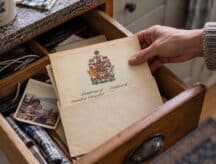
One distinction decides whether any of it counts: an index entry points to a record. Canada's citizenship department will not accept it as evidence. Only the certificate from the office that issued the record carries weight.
What do I need to apply for Canadian citizenship?
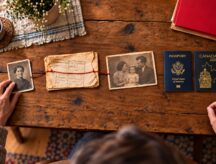
To apply for Canadian citizenship by descent (officially referred to as a proof of citizenship application), you must assemble supporting documentation that proves your ancestor was Canadian, and that you are related to them (which involves tracing documents for every generation between you and your Canadian ancestor).
Canada’s citizenship department groups these documents into primary and secondary tiers based on how strong they are in supporting your case.
Note that a lack of documents does not by itself disqualify your claim—immigration officers assess these applications based on a balance of probabilities, meaning that the officer must be convinced it is more likely than not that your claim is valid to approve your application. An experienced citizenship by descent lawyer can help you assess your claim.
Three documents that may be especially important for applicants from Mexico: the ancestor's Canadian birth certificate, issued by the province; a pre-1947 Canadian naturalization certificate; and the chain of birth certificates linking each generation to the next, including yours.
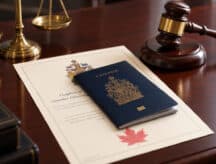
If the records point to a claim, the Canadian government can confirm it. Immigration, Refugees and Citizenship Canada (IRCC) will issue a citizenship certificate that proves your status.
That certificate also allows you to apply for a Canadian passport.
What are the benefits of Canadian citizenship?
Mexican citizenship stays. Mexico has allowed dual nationality since 1998, and Mexicans by birth cannot be stripped of theirs. Claiming Canadian citizenship takes nothing away.
What arrives is a second set of rights that doesn't expire. A Canadian citizen can enter Canada at any time, live in any province, and work without a permit. No employer has to sponsor them. No status lapses if they stay in Mexico for thirty years, and none of it is lost by never moving at all.
Travel changes too. Mexican passport holders need a visa to visit the United States, since Mexico sits outside the US Visa Waiver Program. Canadian citizens don't. For families with relatives in Texas or California, that difference shows up at the border.
Taxes work differently from what many expect. Canada taxes residents, not citizens. A dual citizen living in Chihuahua owes Canada nothing on Mexican income. Tax obligations begin if you move to Canada or hold assets there, and the two countries have a treaty covering the overlap.
Health coverage follows the same logic. Provincial health insurance comes with living in a province, not with holding the passport.
And it passes down. Children of a Canadian citizen inherit the claim, which is why one person's research tends to end with a dozen relatives asking the same question.
If you are wondering how to get started, CanadaVisa has a citizenship by descent eligibility checker. And if the trail runs cold in a colony archive or a 1920s train manifest, an immigration law firm that handles proof of citizenship cases can take the search from there.
A hundred years ago, 6,000 people rode chartered trains out of Canada to start over. The country they left may still count their great-grandchildren as its own.
Get a Free Consultation on Applying for Canadian Citizenship by Descent
- Do you need Canadian immigration assistance? Contact the Contact Cohen Immigration Law firm by completing our form
- Send us your feedback or your non-legal assistance questions by emailing us at media@canadavisa.com