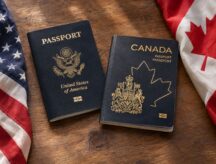
As Canada tightens immigration, Americans with Canadian ancestry still have the most direct path to a second passport

On November 5, alongside the federal budget, Ottawa tabled its 2026 Annual Report to Parliament on Immigration.
The report runs more than 60 pages. It covers study permits, work permits, and visitor visas, as well as permanent residency. It also lists the programs Canada ended, paused, or capped as it moves to further regulate its immigration system.
However, the report contains no line or target for Americans proving citizenship by descent. Canadian law already treats these individuals as citizens; for them, the door to a second passport and greater options has never been more open.
Get a Free Consultation on Applying for Proof of Canadian Citizenship
The most direct path to a Canadian passport
Citizenship by descent means you inherit Canadian citizenship through a parent or earlier ancestor. There is no generational limit to how far Canadian citizenship can pass down through a direct family line.
Bill C-3 took effect on December 15, 2025. It removed the first-generation limit, a rule that stopped citizenship from passing to a second generation born outside Canada. Immigration, Refugees and Citizenship Canada (IRCC) says most people born outside Canada to a Canadian parent before that date are now citizens automatically.
This includes a parent who became Canadian under the same changes, so the line can reach back as far as a grandparent or even a great-grandparent.
To qualify, you need no job offer, no time spent living in Canada, and no language or citizenship test. You apply for a citizenship certificate, the document that proves you’re already Canadian. With it, you can then apply directly for a Canadian passport.
As of November 2026, that passport ranks 7th on the Henley Passport Index. The index measures how many destinations holders can reach without a prior visa. The U.S. passport ranks 10th.
As a citizen, you could live and work anywhere in Canada. You or your children could also qualify for more travel and work options in 36 countries and territories around the globe via the International Experience Canada (IEC) program*.
Both countries allow dual citizenship, so you keep your U.S. passport.
*Note that participation in the IEC is contingent on meeting or being under the age limit per Canada’s youth mobility agreement with each country (typically 30 or 35, depending on the destination).
Could you already be Canadian?
Citizenship by descent runs through a direct family line, specifically passed down from parent to child. That means your parent, their parent, and so on, until you reach your Canadian ancestor.
The further you go back in your family tree, the more relatives you might have in your direct line who can transfer Canadian citizenship status to you.
Two conditions apply: Your birth date must fall before December 15, 2025, and the ancestor at the top of your line must have been a Canadian citizen (usually through birth in Canada or naturalization).
Relatives outside that line can’t pass citizenship to you. A Canadian-born great-aunt, uncle, or cousin doesn’t count, and marrying a Canadian doesn’t either. Adopted people follow a separate process called a direct grant.
Consider these clues before you search any records.
- Your last name. French-Canadian surnames such as Tremblay, Ouellet, Roy, or Desjardins often point north. Other families carry anglicized versions, where Leblanc became White and Boisvert became Greenwood. Some trace back to a “dit name” — a second surname French Canadians used to tell branches of a family apart.
- Family history. A surname that changed at the border or family stories about relatives “up north” are worth following.
- Where your family settled. Nearly 900,000 French Canadians moved to New England mill towns between 1840 and 1930. Cajun families in Louisiana and families in Michigan, Minnesota, and Wisconsin can also have Canadian branches. CIC News has mapped the states where eligibility often clusters.
Records can then confirm a hunch. A death certificate or obituary may list “Canada” as a birthplace. Enumerators in the 1900 and 1930 U.S. censuses wrote “Canada French” or “Canada English” for people born in Canada.
For a quick read on your own family line, CanadaVisa’s citizenship by descent eligibility checker can help by asking about these same details.
Building a claim an IRCC officer will accept
Your documents have two jobs. They have to show your ancestor was a Canadian citizen under the current Citizenship Act, and also link every generation between that ancestor and you.
IRCC officers need documents for each of those generations. The original authority, such as a civil registry or vital statistics office, must issue each one. For most applicants, that means:
- Birth certificates that name the parents, linking each generation to the next
- Proof your ancestor was Canadian, such as a provincial birth certificate or a Canadian naturalization certificate
- Marriage certificates or legal name-change documents wherever a name changed
- Translations of any record not in English or French, with a sworn statement from the translator
IRCC sorts these records into primary and secondary documents. The tiers measure how much weight each record carries as evidence. An official copy from the original authority can still fall into the secondary tier.
IRCC doesn’t accept translations by family members. It also won’t approve a claim supported only by third-party records. Genealogy websites can help you find ancestors. You’ll still need the official copy from the office that holds each record.
If a record no longer exists, you need to explain why in writing. You also need proof you tried to get it, like letters or emails from archives.
Missing records, name changes, and claims that run back three or more generations add complexity. Some applicants bring in professional help at that stage.
Want to know more about which specific documents you need for your case? Use our free family line explorer tool.
The clock starts when IRCC receives your application
As of October 9, 2026, IRCC estimated 34 months to process a citizenship certificate application, and about 130,700 people were waiting for a decision.
That clock on your file starts only when IRCC receives a complete application. Before you can file, you may need to wait for archives in Canada and the U.S. to send records. The earliest date you could receive a certificate depends on when you file.
Get a Free Consultation on Applying for Proof of Canadian Citizenship

- Do you need Canadian immigration assistance? Contact the Contact Cohen Immigration Law firm by completing our form
- Send us your feedback or your non-legal assistance questions by emailing us at media@canadavisa.com