How to find out if your family qualifies for Canadian citizenship, minutes before Thanksgiving dinner

You might think finding a Canadian ancestor takes a weekend in the archives and a paid genealogy account.
It can take five minutes and the people at your Thanksgiving table.
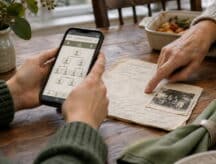
Before the turkey comes out, type your great-grandmother's maiden name into your phone. One search can turn up a Canadian birthplace on a World War I draft card, or a Nova Scotia birth record.
Get a Free Consultation on Applying for Proof of Canadian Citizenship
A find like that could mean a second passport for you, and often for your siblings and children too. It can also mean the right to live, work, and retire in Canada. You'd keep your U.S. citizenship too. The relatives who remember the names are already at the table, and most of the records cost nothing to search.
A Canadian ancestor can make you Canadian today. Canada changed its citizenship law on December 15, 2025. In most cases, there's now no limit on how far citizenship can pass down a direct family line. Your birth date just has to fall before that day. You apply for proof of citizenship, a certificate that confirms the status you already hold. You can then apply directly for a Canadian passport.
The records your application will need
Citizenship by descent passes from parent to child, one generation at a time. Your direct line is your parents, their parents, and so on back, each person the child of the one before. Aunts, uncles, and cousins can point you to a shared ancestor, but they can't pass citizenship to you.
One Canadian in that line is enough. Each generation back doubles the number of people who could be that ancestor. You have eight great-grandparents and 16 great-great-grandparents. So the further back you look, the more chances you have to find one.
Immigration, Refugees and Citizenship Canada (IRCC) checks that line one link at a time. First, an officer confirms your ancestor was Canadian. Then they make sure every generation between that person and you is documented and linked. If anyone's name changed along the way, a record has to link the old name to the new one.
IRCC wants those documents from the original authority. That's the office that created or keeps the record, like a vital statistics office or a provincial archive. A printout from a genealogy website counts as a third-party record, and an application can't rest on those documents alone.
| What you need to show | Examples of documents that support this | What you can find at the table |
|---|---|---|
| That your ancestor was Canadian | A Canadian birth record or naturalization certificate | A Canadian birthplace, or a registration you can order |
| That names match across records | A marriage record or legal name change | Maiden names, other spellings, and "dit names" (a second surname many French-Canadian families used) |
| Who was whose child, in each generation | Long-form birth records that name the parents | Names, dates, and places that tell you which birth record to order |
IRCC gave a presentation to the Association of Canadian Archivists. It said it treats records like census pages, baptismal certificates, and military records as secondary evidence. An officer can weigh them, but they can't replace a primary document like a birth certificate. Most of what you find on your phone this Thanksgiving falls in that second group. Use it to find out which record to order, and from which office.
Read how IRCC sorts documents into primary and secondary tiers.
Seven free resources to check if you're a Canadian citizen by descent
| Resource | Best for | What it gets you |
|---|---|---|
| Canadian Ancestry Explorer | Those who might have French-Canadian, Acadian, or anglicized last names | A clue regarding the origins of your last name and a question to ask |
| Citizenship by descent eligibility checker | Anyone who knows or suspects a Canadian ancestor | The generation your claim runs through |
| Family Line Explorer | Families who already know their Canadian ancestor | A checklist of records for each generation |
| World War I draft cards | Those with great-grandfathers born about 1873 to 1900 | A birthplace to follow up |
| 1930 U.S. census | Those with grandparents born in the U.S. to Canadian parents | The generation that crossed the border |
| Canadian census search | Anyone with English-Canadian and Ontario families | A Canadian town and year |
| Canadian naturalization lists | Anyone who believes their ancestors immigrated to Canada and lived there before moving elsewhere | A certificate number to order |
Start with what your family knows
Each search below depends on facts that live in someone's memory. Ask for full names, including maiden names and any other spellings. Ask where each person was born, and when. Ask who kept the family papers after a grandparent died.
If someone in your line is sitting at the table, ask them to order their own birth certificate. It's often faster and easier than ordering it for them later.
If you need help getting the conversation started, try these five questions to ask your oldest relative this Thanksgiving.
Records you can pull up on your phone
The first two records below sit on FamilySearch. It asks for a free account, so set one up before dinner.
World War I draft registration cards. Three rounds of registration in 1917 and 1918 reached about 24 million men, according to the U.S. National Archives, and the last round covered ages 18 to 45. A card can list a man's birth date, his birthplace, and, on some cards, his father's birthplace. FamilySearch holds the full set.
- Best for: families with a great-grandfather born between about 1873 and 1900 who lived in the U.S. during the war.
- What it does for your application: a Canadian town on the card tells you which birth record to order. The card counts as secondary evidence, and a FamilySearch printout is a third-party copy. Read how IRCC weighs American records.
The 1930 U.S. census. Census takers recorded each person's birthplace and the birthplaces of both parents. For anyone born abroad, they also noted the language spoken at home before coming to the United States. You can search it and view the original pages on FamilySearch.
- Best for: a grandparent born in Lowell, Manchester, or Lewiston to parents born in Canada. The parents' columns show which generation crossed the border.
- What it does for your application: points you to a generation and a province. A census taker wrote down what someone at the door told them, so treat the entry as a lead. Earlier censuses hold other clues, like the 1900 "Canada French" label covered in our Thanksgiving dinner guide.
Canada's national census search. Library and Archives Canada (LAC) lets you search Canadian census returns from 1825 to 1931 for free. You can search by name, age, or birth year, then narrow it down by province or town.
- Best for: English-Canadian and Ontario families, and anyone with a name and rough birth year for an ancestor who lived in Canada.
- What it does for your application: places your family in a Canadian town in a given year, with ages. That points you to the birth record to order. A census entry counts as secondary evidence.
Canada's naturalization lists, 1915 to 1951. Some ancestors moved to Canada from another country and naturalized there before heading south. LAC's free database of published naturalization lists may hold their names, and we explain how to search it.
- Best for: families with an ancestor who came to Canada from Ireland, Scotland, Poland, Lebanon, or elsewhere.
- What it does for your application: gives a certificate number you can use to order the real file. A blank result doesn't mean your ancestor never naturalized.
Before you put the phone down
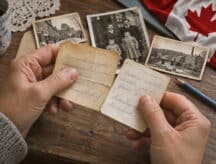
Screenshot each index entry you find. Write down names as the record spells them, plus the parish or county, the dates, and any reference numbers. Archives ask for a full name, an approximate date, and a place when you order a record.
Found a Canadian ancestor? CanadaVisa's Family Line Explorer can help you check each generation between that person and you, and then list the records you'd need.
Further research, when you have more time
Quebec parish registers. As of November 2026, FamilySearch holds about 1.4 million images of Quebec Catholic parish registers from 1621 to 1979. It has indexed only a small part by name, so you'll browse by parish. That works best when the family knows the town or parish. For your application, IRCC doesn't accept Quebec birth or marriage certificates issued before January 1, 1994. Our Quebec documents guide explains what to order from Quebec's archives instead.
Ontario records. Ontario began civil registration in 1869. Our Ontario documents guide shows which office holds which years.
New England birth records. The U.S.-born generations in your line need birth records too. Each New England state splits them between town halls, state archives, and health departments. The birth year decides which office holds yours.
After dinner
If Thursday turns up a name, a town, and a province, you have enough to take the next step. CanadaVisa's citizenship by descent eligibility checker can show which generation your claim runs through.
Some lines take more work, like those with missing records, an ancestor who became American, or roots before 1947. A lawyer can review those documents before you apply for proof of Canadian citizenship.
Get a Free Consultation on Applying for Proof of Canadian Citizenship

- Do you need Canadian immigration assistance? Contact the Contact Cohen Immigration Law firm by completing our form
- Send us your feedback or your non-legal assistance questions by emailing us at media@canadavisa.com