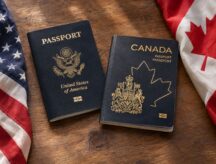
Where New England applicants are finding the birth records they need to prove Canadian citizenship by descent

Your grandparent or great-grandparent was born somewhere in New England, maybe in a Massachusetts mill city or a small town in Vermont. You asked that state's vital records office for the birth certificate, and it had nothing to send you.
You may have concluded that the birth was never recorded, and that your claim to Canadian citizenship by descent stalls with them.
Their record may still exist, in a different office.
Get a Free Consultation on Applying for Proof of Canadian Citizenship
Many Canadian families moved to mill towns like Lowell, Manchester, and Lewiston (for example) in the late 1800s and early 1900s. If any of the ancestors in the direct line of lineage you are claiming Canadian citizenship through were born in New England, you need a birth record for each of those links.
However, each of the six New England states splits its birth records between town halls, state archives, and health departments. The year of birth often decides which office holds the copy you need.
Canada wants the record from the office that created or keeps it
Immigration, Refugees and Citizenship Canada (IRCC) asks for documents "issued by the original authority that created or keeps the record." That includes a civil registry or a vital statistics office, and the document has to clearly show who issued it.
IRCC also says an application "can't be supported solely by third party records." A printout from a genealogy website won't carry your claim on its own.
A birth certificate from another country that shows the parent-child relationship counts as a primary document, the strongest tier of evidence IRCC considers. (CIC News has covered IRCC's primary and secondary tiers in detail.) For a New England-born generation, that means a US birth certificate naming both parents.
Ask specifically for a certified long-form copy. The long-form lists both parents, while a short-form or wallet version generally doesn't.
Which office holds each New England birth record
Consider the birth year before you send a request, since each state has its own cutoff. Fees and wait times below are current as of November 2026.
| State | Where the record sits, by birth year | Good to know |
|---|---|---|
| Massachusetts | • Before 1841: the town or city clerk where the birth happened • 1841 to 1935: Massachusetts Archives • 1936 onward: Registry of Vital Records and Statistics • Town and city clerks may also hold later years | • The Archives charges $3 per certificate, by cash or check, for up to five per order • Archives orders take 20 weeks or more • Some city clerks, like Newton's, issue only long forms |
| New Hampshire | • Before 1935: the town clerk where the birth was filed, or the Division of Vital Records Administration in Concord • 1935 onward: any New Hampshire town clerk, except for 1949 and 1950 births | • The state vault in Concord holds records back to 1640 • Births over 100 years old are public |
| Maine | • Before 1820: Massachusetts, since Maine was part of it until then • 1820 to 1891: the town office where the birth happened, or the Maine State Archives • 1892 onward: the state vital records office in the Department of Health and Human Services | • Records before 1892 are open without restriction • Births over 75 years old are open to anyone, but only as uncertified copies |
| Rhode Island | • Before 1853: the city or town clerk • 1853 to 1925: Rhode Island State Archives • 1926 onward: the Department of Health's Center of Vital Records in Cranston, or city and town halls | • The State Archives certifies births over 101 years old, so its range moves forward each year |
| Vermont | • 1908 and earlier: the town clerk where the birth was filed, or the Vermont State Archives and Records Administration (VSARA) • 1909 onward: only through the Health Department's Statewide Registration System | • Town clerks and VSARA can issue post-1909 copies from the state system • Certified copies cost $10 • VSARA holds the state's copies of records from 1857 to 1968 |
| Connecticut | • Before 1897: the town where the birth happened, or the Connecticut State Library • 1897 onward: the town where the birth happened, or the state vital records office | • Towns sell a short "wallet" form and a long form, so ask for the long form |
Who can order a certified copy
Most of these states limit certified copies to the person named and their close family. Your place in the family tree decides whether you can order your ancestor's record yourself.
| State | Where to order | Grandchild of the person born | Great-grandchild |
|---|---|---|---|
| Massachusetts | • Before 1841: the town or city clerk • 1841 to 1935: Massachusetts Archives • 1936 onward: Registry of Vital Records and Statistics | • Yes, births are open to anyone • Births to unmarried parents are the exception | • Same rules as a grandchild |
| New Hampshire | • Any town clerk for births from 1935 on, except 1949 and 1950 • The Division of Vital Records Administration | • Yes, state law counts grandchildren as immediate family | • Yes, the same law includes great-grandchildren • Births over 100 years old are public |
| Maine | • The state vital records office (Department of Health and Human Services) • Before 1892: the town office or the Maine State Archives | • Yes, as a "descendant," with proof of lineage | • Yes, Maine sets no limit on generations |
| Rhode Island | • Before 1853: the city or town clerk • 1853 to 1925: Rhode Island State Archives • 1926 onward: the Department of Health's Center of Vital Records | • Yes, the law covers the registrant's "issue (child, child's child, etc.)" | • Yes, under the same rule • Members of incorporated genealogical societies also qualify |
| Vermont | • 1908 and earlier: the town clerk or the Vermont State Archives and Records Administration • 1909 onward: the Health Department's Statewide Registration System | • Yes | • No, the law doesn't list great-grandchildren • The rule also covers pre-1909 copies from town clerks |
| Connecticut | • The town where the birth happened • Before 1897: the Connecticut State Library • 1897 onward: the state vital records office | • Yes • For births 100 years or older, anyone 18 or older can order | • Births 100 years or older: anyone 18 or older can order • Younger births: not listed, but members of incorporated genealogical societies can order |
If you're not eligible, consider who is one generation closer. In Vermont, your parent is the grandchild of your great-grandparent and can order the record. Maine asks descendants to show their lineage, so have the birth certificates that connect you ready for any office.
Trace your family lineage with the Family Line Explorer
Two cases to raise with a lawyer before you order
Massachusetts seals the birth records of children born to unmarried parents. Under state law, a certified copy can go only to the person named on the record, their parent, guardian or conservator, their attorney, or someone holding a court order. Descendants don’t qualify, so if your Massachusetts-born ancestor’s parents weren’t married, you may not be able to order the certificate yourself. Births recorded before 1841 aren’t affected. If this could apply to someone in your line, speak with a lawyer before placing an order.
Vermont's list stops at grandchildren. If no eligible relative is alive to order a Vermont great-grandparent's record, the law also allows legal representatives or a court order. A lawyer may help you weigh which route fits your family.
If the clerk finds nothing
When you can't get a document from the original authority, IRCC asks you to explain why in writing. You also need proof that you tried, like emails or letters with the office. Keep a log as you go. For each request, note the office, the date, what you asked for, and the reply.
These three letters help an officer follow your evidence:
- A no-record letter, if the office issues one. It confirms that the office searched and found nothing.
- A letter of explanation. It covers one gap: the missing record, what you're sending instead, and how you tried to get the original.
- A cover letter. It maps your whole family line for the officer.
Other records can then support that generation. US naturalization papers and death certificates often name a birthplace, though most US records count as secondary evidence. A sibling's birth certificate naming the same parents can also fill a gap.
Common questions about New England birth records
Does IRCC accept a birth certificate from a US state archive?
IRCC asks for documents from "the original authority that created or keeps the record," including a civil registry or vital statistics office. Its wording covers offices that keep a record, but it doesn't name US state archives specifically. Whichever office you use, your certified copy has to clearly show who issued it.
Can I use a short-form New England birth certificate?
A short-form or wallet certificate generally doesn't list both parents, so it can't show the parent-child link IRCC looks for. Ask for the certified long-form copy instead.
Where are old Massachusetts birth records kept?
The town or city clerk holds births from before 1841. The Massachusetts Archives holds 1841 to 1935, and the Registry of Vital Records and Statistics holds 1936 onward.
My ancestor was born in Maine before 1820. Where is the record?
Maine was part of Massachusetts until 1820, so Maine's records from before that year are in Massachusetts.
Can a great-grandchild order a Vermont birth certificate?
No. Vermont law lists grandchildren but not great-grandchildren. Your parent, as the registrant's grandchild, can order it instead.
Where a citizenship by descent lawyer can help your case
A lawyer may help you better understand IRCC's requirements for each generation of your claim, and review the weakest link in your chain. Before you reach out, some helpful information to have includes:
- Your Canadian ancestor's full name and place of birth
- The town and year of birth for each New England-born generation
- Your relationship to each person in the line
- Each office you contacted, the date, and the reply
- The certified copies you already hold
- Any relatives who could order a record or apply through the same ancestor
Not sure which ancestor your claim runs through? CanadaVisa's citizenship by descent eligibility checker can help you find out.
Get a Free Consultation on Applying for Proof of Canadian Citizenship

- Do you need Canadian immigration assistance? Contact the Contact Cohen Immigration Law firm by completing our form
- Send us your feedback or your non-legal assistance questions by emailing us at media@canadavisa.com