Provincial and federal immigration ministers meet to discuss shared priorities

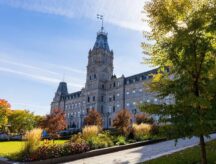
Immigration Minister Marc Miller met with provincial and territorial immigration ministers in Montreal on May 10 to discuss shared priorities for the future of immigration in Canada.
Together, the ministers make up the Federation of Ministers Responsible for Immigration (FMRI). The FMRI is a decision-making body that aims to support an effective Canadian immigration system. Its mission is to advance joint immigration priorities and to enhance Canada's immigration policies and programs.
The FMRI meets twice a year for immigration ministers to advance provincial priorities and collaborate with colleagues. The last meeting occurred in November 2023.
Discover if You Are Eligible for Canadian Immigration
Throughout yesterday’s conference, the Minister reiterated that the discussions were widely positive and productive but noted that there was still work to be done, particularly within the scope of Canada’s international student program.
International students
He said this has been a “turbulent” year for the program due to several significant changes that have been implemented since January. These changes include a cap on the number of international student applications that Immigration, Refugee and Citizenship Canada (IRCC) will consider, the introduction of Provincial Attestation Letters (PALs) and changes to eligibility criteria for Post-Graduation Work Permits (PGWPs).
The minister further noted that some provinces and territories have requested that IRCC consider longer PGWPs for graduates of healthcare and trades professions, both of which are sectors that employ an aging workforce.
Minister Miller said that IRCC is working on a permanent residence pathway for construction workers. He mentioned the current Express Entry category for candidates with trades occupations. However, according to a recent Access to Information request (ATIP), this category will account for just 5% of the invitations to apply (ITAs) issued in category-based Express Entry draws in 2024.
Additionally, many of these professions require provincial accreditation and the Minister said, as in previous meetings, provinces are working to “cut the red tape” surrounding the process so newcomers can work in their chosen fields faster. Foreign credential recognition is a provincial responsibility.
Temporary resident levels
Yesterday’s meeting was the first since IRCC announced several new measures and policies regarding temporary resident levels in Canada. Specifically, IRCC plans to begin adding temporary resident levels to the annual Immigration Levels Plan. Minister Miller has said that these targets will act as a “soft cap” on the number of temporary residents (those in Canada on work or study permits, as well as visitor visas) for the next three years.
Overall, the temporary residents currently make up 6.2% of Canada’s population. The new targets will bring this number down to 5% over the next few years.
While speaking yesterday, Minister Miller noted that more accurate data sharing between provinces and territories and the federal government was needed to ensure that provinces can plan adequately for the future and better match incoming newcomers to labour force needs.
Part of IRCC’s plan to reduce temporary resident levels is to pursue more domestic draws. This was recently seen in action when IRCC agreed to extend the work permits of almost 7,000 PGWP holders who are candidates for the Manitoba Provincial Nominee Program. Extending these work permits reduces the need for Canada to admit more candidates from abroad to close gaps in the labour force.
IRCC said it was open to working with other province and territories in a similar way to help transition more temporary residents to permanent residents.

- Do you need Canadian immigration assistance? Contact the Contact Cohen Immigration Law firm by completing our form
- Send us your feedback or your non-legal assistance questions by emailing us at media@canadavisa.com