Born outside Canada between 1977 and 1981? You may have lost Canadian citizenship at 28, and got it back without knowing

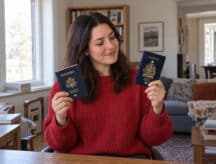
In a kitchen drawer in Seattle sits a document Dana hasn't looked at in years. It's a Canadian citizenship certificate, issued when she was a baby. As far as she knew, this document was no longer valid.
Her parents applied for it in 1979. Her grandfather was born in Brandon, Manitoba, and moved to the U.S. as a young man. Her father was born in Portland, Oregon, and the family registered his birth with a Canadian consulate. That made him Canadian through his father. Dana's mother was American, born in Tacoma.
Then, on her 28th birthday in 2007, Dana stopped being Canadian. No letter arrived. Nothing changed in the drawer.
She found out in 2015, when she asked a consulate about getting a Canadian passport.
Dana is a composite, based on a pattern found in Canadian citizenship law. While she is fictional, her situation is real for thousands of people.
Get a Free Consultation on Applying for Proof of Canadian Citizenship
In December 2025, a new Canadian law gave Dana her citizenship back. She didn't have to apply. In the eyes of the law, it's as if she never lost it at all.
If you were born outside Canada between February 15, 1977, and April 16, 1981, and your Canadian parent was also born abroad, this may be your story too. And if this better describes a parent or other relative in your direct lineage, you may be a Canadian citizen too.
Note: You don't need a drawer like Dana's. Many people in this group never had a Canadian citizenship certificate, and their parents never registered their births. The new law can cover them too.
A rule almost nobody knew about
In 1977, Canada changed how citizenship passed to children born abroad. Any child born outside Canada to a Canadian parent was a citizen at birth.
But there was a catch for families who'd lived abroad for more than one generation.
If your Canadian parent was also born outside Canada, your citizenship came with an expiry date. To keep it past your 28th birthday, you had to do three things first:
- Register as a Canadian citizen;
- Live in Canada for a year, or show a "substantial connection" to Canada, such as working or studying there; and
- Apply to keep your citizenship.
Miss any step, and your citizenship ends on your birthday. Most families never heard of the rule. Many children who'd been registered as babies grew up assuming they were Canadian for life.
Why 2009 left this group behind
Canada scrapped the rule on April 17, 2009—anyone who hadn't yet turned 28 kept their citizenship.
But the change didn't help people who'd already passed their 28th birthday. They stayed out.
This locked a specific group of Canadians out: people born between February 15, 1977, and April 16, 1981. They were the only ones who turned 28 while the rule was in force. Today, they're in their mid-to-late 40s.
Why this cohort is now Canadian, in the eyes of the law
On December 15, 2025, Bill C-3 took effect. Among other changes, it restored citizenship to people who lost it under the old 28 rule. That includes those who never applied to keep it, and those whose applications were refused.
IRCC's instruction guide for proof of citizenship applications names this group directly. It says they're citizens "effective from… the date they lost their citizenship."
The law treats the gap as if it never happened. The only exceptions are people who formally gave up their citizenship, or had it taken away.
According to internal IRCC training materials released through an access to information request, officers were briefed on this group before the law took effect.
The fix also reaches the next generation. Because Dana's citizenship now runs without a break, her children born before December 15, 2025, were born to a Canadian citizen. They may qualify too. That includes children born after her 28th birthday, while she thought she was no longer Canadian.
For a family like Dana's, this also means that she and her children can be recognized as dual American-Canadian citizens, giving them a wide array of options.
Could this be you?
These clues point to the 28 rule:
- You were born outside Canada between February 15, 1977, and April 16, 1981
- Your Canadian parent was also born outside Canada, and neither of your parents was born in Canada
- You didn't live in Canada in your 20s
- Some families also have old Canadian paperwork, such as a childhood citizenship certificate, or a parent's Registration of Birth Abroad (a Canadian record of a birth outside Canada). It's a helpful sign, but not a requirement.
If you were born after April 16, 1981, the rule never caught you. If either of your parents was born in Canada, it didn't apply either. In both cases, you may already be a Canadian citizen for other reasons.
"This applies to me, or a relative of mine, but I don't have the documentation"
That's common, and it doesn't rule you out.
Under the 1977 rules, a child born abroad to a Canadian parent was a citizen at birth. Nobody had to apply for a certificate for that to be true. So, you may have lost citizenship at 28 without ever holding a Canadian document.
Bill C-3 restores you either way. What counts is whether your parent was Canadian when you were born. A certificate in a drawer doesn't decide that.
What if your parent's own birth abroad was never registered with Canada? Then your parent may not have been recognized as Canadian back then. In that case, you may not have had citizenship to lose. But you're likely covered now by a different route. Canada's earlier fixes recognize many parents like yours, and Bill C-3 removed the limit that would have stopped at you.
Either way, the path forward is the same. IRCC's checklist has a specific scenario for people born abroad to a Canadian parent who never had a certificate. Instead of old Canadian papers, you build a chain of records:
- Your birth certificate, naming your Canadian parent
- Your parent's birth certificate, naming their Canadian parent
- Proof that your Canadian ancestor was born in Canada, such as a provincial birth record
Each record links one generation to the next. Together, they show where your citizenship comes from.
What to do if the 28 rule applies to you, or a relative of yours
You're already a citizen under the law. To prove it, you need a citizenship certificate. Here's how people in this situation typically get there.
- Find your old papers, if any. Look for a childhood citizenship certificate, a parent's Registration of Birth Abroad, or letters about keeping your citizenship. If you find nothing, that's fine. IRCC offers a search of citizenship records to show what it has on file.
- If you have an old certificate, keep it, but don't count on it alone. IRCC's application guide asks anyone previously issued a certificate to send the original in with a new application. Once a new certificate is approved, the old one is cancelled and replaced. IRCC officers are instructed to account for any previously issued certificate when they review an application.
- Gather your documents. You'll need a birth certificate that names your Canadian parent. You'll also need proof of your parent's and grandparent's Canadian citizenship. IRCC ranks documents into primary and secondary tiers, and the difference matters.
- Fill the gaps. Records from the 1950s and 1970s can be hard to find. A letter of explanation can account for missing pieces. So can a no-record letter from the office that should have held them.
- Check your children's details. Children born abroad before December 15, 2025, may qualify through you. For children born on or after that date, a different rule applies. You'd need to show you spent at least 1,095 days in Canada before their birth. Here's how IRCC counts those days.
- Apply for a passport. Once your certificate arrives, you can apply for a Canadian passport.
Cases like Dana's often turn on decades-old paperwork from two countries. A professional review can help confirm which documents count and what's missing.
Think the 28 rule caught you, or someone in your family? Check your eligibility with CanadaVisa's citizenship by descent calculator.
Get a Free Consultation on Applying for Proof of Canadian Citizenship

- Do you need Canadian immigration assistance? Contact the Contact Cohen Immigration Law firm by completing our form
- Send us your feedback or your non-legal assistance questions by emailing us at media@canadavisa.com