Year in review: How did the Rural Community Immigration Pilot fare in 2025?

In the first year of its operation, the Rural Community and Immigration Pilot (RCIP) helped more than a thousand newcomers gain permanent residency (PR) and settle in 14 of Canada’s fast-developing communities.
The RCIP is set to continue facilitating the immigration of newcomers this year as Immigration, Refugees and Citizenship Canada (IRCC) continues initiatives to spread the benefits of immigration to the country’s smaller communities.
This article will cover how this new pathway has developed over the last year, which sectors were prioritized across participating communities, and the data provided by communities for 2025 worker selection.
Assess your eligibility for the RCIP
How does the RCIP function?
Canada’s RCIP was introduced last year as a community-driven PR pathway designed to help select rural communities outside Quebec fill local labour shortages. In practice, these communities designate specific employers who work with IRCC to recruit workers in priority sectors and occupations established by the community.
To qualify, you must have a valid job offer from a designated employer, who submits a recommendation application to the community for review. If the community recommends you, you can then submit your PR application directly to IRCC.
A brief timeline of RCIP development in 2025
The following list tracks major developments for the RCIP in its first year of operation:
- January 30, 2025 — RCIP officially launched and communities announced.
- IRCC launched the RCIP (alongside the Francophone Community Immigration Pilot) and named the 14 communities participating in the pilot; it also explained the community/economic-development-organization role central to the RCIP (designating employers, recommending candidates, etc.).
- June 5, 2025 — IRCC published the main RCIP program page with “Optional: Work permit” guidance posted.
- IRCC published details for a two-year employer-specific work permit tied to the RCIP, including spouse/partner work permit notes and "how-to" steps.
- August 13, 2025 — IRCC clarified eligibility requirements on its “Who can apply” RCIP webpage.
- IRCC posted the core eligibility checklist (job offer, one year of relevant work experience, language test, educational credential, settlement funds, etc.).
- November 20, 2025 — The 2025 Annual Report to Parliament on Immigration discussed the RCIP in regional programming, attesting that the pilot would function as a replacement for the Rural and Northern Immigration Program (RNIP).
Throughout the last year, the RCIP's participating communities also asynchronously announced their inclusion in the program, along with their designated employers.
Which communities joined the RCIP in 2025?
Thus far, 14 communities have joined the immigration pilot since its launch, across six different provinces, including:
- Pictou County, Nova Scotia (NS);
- North Bay, Ontario (ON);
- Sudbury, Ontario (ON);
- Timmins, Ontario (ON);
- Sault Ste. Marie, Ontario (ON);
- Thunder Bay, Ontario (ON);
- Steinbach, Manitoba (MB);
- Altona/Rhineland, Manitoba (MB);
- Brandon, Manitoba (MB);
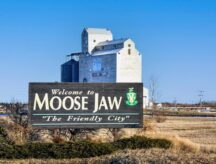
- Moose Jaw, Saskatchewan (SK);
- Claresholm, Alberta (AB);
- West Kootenay, British Columbia (BC);
- North Okanagan Shuswap, British Columbia (BC); and
- Peace Liard, British Columbia (BC).
These communities all nominated designated employers who work in in-demand sectors where greater hiring demand was not being met.
Assess your eligibility for the RCIP
Which sectors were targeted by the RCIP last year?
Through each community's designated employers, the RCIP targeted workers in the following priority sectors to work in selected communities and be nominated for PR:
- Business, Finance & Administration;
- Health / Health Care / Health occupations;
- Education, Law & Social, Community & Government Services;
- Sales & Service;
- Trades & Transport
- Manufacturing & Utilities
- Natural Resources & Agriculture
- Natural & Applied Sciences
The most widespread sectors across all 14 communities were:
- Health;
- Education/Law/Social/Community/Government;
- Sales & Service;
- Trades & Transport; and
- Manufacturing/Utilities.
Compared with other sectors, the Natural & Applied Sciences sector was the least widespread, limited to Greater Sudbury and Peace Liard.
How many people immigrated through the RCIP in 2025?
While statistics around the program are not consistently posted across all participating communities, the following information is available:
| RCIP community | PR candidates supported in 2025 |
|---|---|
| Greater Sudbury, ON | 517 candidates recommended |
| Thunder Bay, ON | 475 recommendation certificates issued |
| North Bay, ON | 190 community recommendations granted |
How to apply for PR through the RCIP
To apply for PR under this five-year rural immigration pilot, you must
- Have a valid job offer from a designated employer in the community;
- Have at least one year (1,560 hours) of related work experience in the past three years;
- Prove your language abilities by taking an approved test;
- Have a Canadian educational credential or the foreign equivalent; and
- Prove you have enough money to support yourself and your family.
- Ranging from $10,507 for a sole applicant to $27,806 for a family of seven (+$2,831 per additional family member).
Applicants (and their spouses) can also receive a two-year work permit as their application for PR is being processed, to ensure that they may start working for their employer in their selected community, without needing to wait to receive permanent status in Canada.

- Do you need Canadian immigration assistance? Contact the Contact Cohen Immigration Law firm by completing our form
- Send us your feedback or your non-legal assistance questions by emailing us at media@canadavisa.com