Was your ancestor from a US border town? A common historical practice could make you a Canadian citizen today

Along the St. Croix River in Maine lies the border city of Calais, just a six-minute drive from St. Stephen, New Brunswick.
Though separated by an international border, the two communities have historically shared much of their daily lives, including access to medical care.
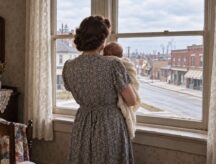
In fact, in the 1940s, roughly one-third of babies born at the former Chipman Memorial Hospital in St. Stephen reportedly had American mothers.
Get a Free Consultation on Applying for Proof of Canadian Citizenship
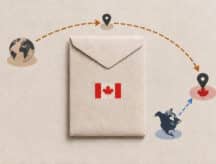
Thanks to changes to Canada's citizenship laws that took effect on December 15, 2025, some of those descendants may now be Canadian citizens themselves — potentially eligible for a Canadian passport without ever having lived in Canada.
Why Americans from border towns were born in Canadian hospitals
If your ancestors lived in an American town near the Canadian border, there's a chance they were actually born in Canada — even if they spent their entire lives in the United States.
For decades, some families crossed the Canada-US border for medical care, including childbirth, for access to the nearest or better-equipped hospital. In some border communities, the practice was surprisingly common, as in the case of the city of Calais.
According to a 1946 article published in The Saturday Evening Post, which documented the close relationship between the two communities, Chipman Memorial Hospital had a dedicated maternity wing that the hospital in Calais lacked.
As a result, American mothers routinely crossed the border to give birth in Canada.
The article described a pregnant woman travelling across the Ferry Point Bridge, with Canadian immigration officials already aware that she was headed to Chipman Memorial Hospital.
A 1988 Los Angeles Times article also documented the closeness between the two cities. In fact, Dan Hollingdale, a radio station manager from Calais quoted in the article, held dual citizenship because he had been born at Charlotte County Hospital in St. Stephen (New Brunswick).
Hollingdale's case illustrates how someone could grow up American, live and work in the United States, yet also hold Canadian citizenship because of where they were born.
And this wasn't an isolated incident.
Trace your family lineage with the Family Line Explorer
Border babies: a phenomenon across the US-Canada border
On the other side of the continent, some residents of Point Roberts, Washington, also relied on Canadian hospitals.
Point Roberts is an unusual American community, connected by land to British Columbia rather than the rest of the United States. To reach another part of Washington by road, residents must travel through Canada and cross the international border twice. Historically, this geographic isolation had consequences for medical care.
Research from the University of Victoria documented that many American children from Point Roberts were often born in Vancouver hospitals. A 1996 Washington Post report also noted that residents regularly travelled into neighbouring British Columbia for essential services, including medical care.
There are a number of other towns located across the US and Canada where the border lines blurred.
Take the case of Northern Vermont, where the border line crossed a small town. On the American side, the town is called Derby Line, on the Canadian, Stanstead, Quebec. Two children born just minutes away from each other geographically, could have different citizenship statuses, depending on which side of the border they were born.
Similar historic circumstances may have existed in other closely connected border cities, be it Sault Ste. Marie (located in both Michigan and Ontario) or in Detroit, Michigan, and Windsor, Ontario.
Twin Towns Along the Canada–U.S. Border
| US town | American State | Canadian town | Canadian Province |
| Point Roberts | Washington | Tsawwassen (Delta) | British Columbia |
| Blaine | Washington | Surrey / White Rock | British Columbia |
| Sumas | Washington | Abbotsford | British Columbia |
| Oroville | Washington | Osoyoos | British Columbia |
| Sweet Grass | Montana | Coutts | Alberta |
| Portal | North Dakota | North Portal | Saskatchewan |
| Westhope | North Dakota | Lyleton | Manitoba |
| Pembina | North Dakota | Emerson | Manitoba |
| International Falls | Minnesota | Fort Frances | Ontario |
| Baudette | Minnesota | Rainy River | Ontario |
| Sault Ste. Marie | Michigan | Sault Ste. Marie | Ontario |
| Port Huron | Michigan | Sarnia | Ontario |
| Detroit | Michigan | Windsor | Ontario |
| Buffalo / Niagara Falls | New York | Fort Erie / Niagara Falls | Ontario |
| Ogdensburg | New York | Prescott | Ontario |
| Massena | New York | Cornwall | Ontario |
| Rouses Point | New York | Lacolle | Quebec |
| Derby Line | Vermont | Stanstead | Quebec |
| Estcourt Station | Maine | Pohénégamook | Quebec |
| Fort Kent | Maine | Clair | New Brunswick |
| Madawaska | Maine | Edmundston | New Brunswick |
| Van Buren | Maine | Saint-Léonard | New Brunswick |
| Houlton | Maine | Woodstock | New Brunswick |
| Calais | Maine | St. Stephen | New Brunswick |
| Lubec | Maine | Campobello Island | New Brunswick |
Why being born on Canadian soil matters for citizenship
Under Canada's citizenship laws, most people born on Canadian soil are Canadian citizens, regardless of their parents' nationalities.
This means that an American whose parents crossed into Canada for childbirth may have acquired Canadian citizenship by virtue of being born there, even if they returned to the United States shortly afterward.
There are limited exceptions, including certain children of foreign diplomats.
For Americans who discover that a parent, grandparent or more distant ancestor was born in Canada, the connection could be especially significant following recent changes to Canada's citizenship laws.
On December 15, 2025, Bill C-3 came into effect, removing the former first-generation limit on citizenship by descent in certain circumstances.
Previously, Canadian citizens born abroad generally could not automatically pass citizenship to another generation also born outside Canada.
The new law removed that restriction for those born before December 15, 2025.
As a result, Americans born before that date who can trace their lineage to a qualifying Canadian ancestor may now be Canadian citizens, even if their families have lived in the United States for multiple generations. This includes parents, grandparents, great-grandparents, and ancestors further along the line.
How to find out if your ancestor was born in Canada
If your ancestors previously lived in a border town – be it Detroit, Sault Ste Marie or Calais – it may be worth asking some deeper questions.
The first step would be to establish where your ancestors were actually born.
An ancestor who lived their entire life in Maine or Washington may nevertheless have a Canadian birthplace listed on their official birth records.
This makes it worth examining family documents carefully. If you discover a Canadian-born ancestor, the next step is to establish the family relationship linking you to that person.
These may include birth certificates, historical citizenship records and, in certain circumstances, alternative documents where official birth records are unavailable.
For Americans with family roots in border communities, an old birth certificate could unlock a second citizenship.
If you are unsure whether your ancestor qualifies, a licensed immigration professional may be able to give you personalized guidance.
Get a Free Consultation on Applying for Proof of Canadian Citizenship

- Do you need Canadian immigration assistance? Contact the Contact Cohen Immigration Law firm by completing our form
- Send us your feedback or your non-legal assistance questions by emailing us at media@canadavisa.com