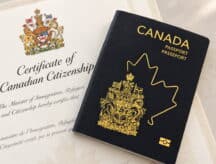
Canada celebrates Citizenship Week 2024

Canada is celebrating its annual Citizenship Week.
In a statement released by Immigration Refugees and Citizenship Canada (IRCC) Immigration Minister Marc Miller said that this week is an opportunity for Canadians to reflect on what it means to be Canadian. The week runs from May 13-19.
The Minister will mark the week by attending several citizenship ceremonies and events while visiting “local organizations that provide assistance to newcomers by offering a range of services from official language training to finding employment.”
Schedule a Free Canadian Citizenship Consultation with the Cohen Immigration Law Firm
Canada welcomed 393,500 new citizens between April 1, 2023, and March 31, 2024, outpacing the almost 364,000 new citizens from the same period last year.
Other newcomer-focused events this month include Toronto’s annual Newcomer Day. On May 23, anyone in Toronto can visit Nathan Phillips Square and access information about settlement services, finding employment, Canada’s history and more. The day will also feature a citizenship ceremony.
Why become a Canadian citizen?
Canadian citizens benefit from a wealth of rights and freedoms in a multicultural society that encourages tolerance for others regardless of race, religion, gender and more.
Citizens are also eligible for a Canadian passport, which is among one of the strongest in the world and allows visa-free access to over 100 countries worldwide. They may enter and leave Canada without the worry of obtaining a visa or permit.
Citizens may also vote in federal, provincial, and municipal elections and access more government benefits and guaranteed free healthcare (once they get a provincial health card).
Finally, post-secondary education in Canada is significantly less expensive for citizens than it is for international students.
How to become a Canadian citizen
The path to becoming a Canadian citizen has multiple steps. To begin with, all new citizens must already be permanent residents of Canada. This can be achieved by applying through one of over 100 Canadian immigration pathways.
Once a citizenship candidate has permanent resident status, they must then meet the physical residence requirements. Specifically, citizenship applicants must have lived in Canada for at least three of the past five years or a total of 1,095 days.
This doesn’t necessarily mean that it takes three full years after getting permanent residency to become a citizen. IRCC allows applicants to count time spent as a temporary resident or protected person in the past five years towards their physical resident requirement. Each day spent as a temporary resident can be counted as a half day, up to a maximum of 365 days.
Finally, you may need proof that you have filed taxes in Canada for three of the past five years. This will typically be necessary for anyone who has worked in Canada as a temporary or permanent resident. Those who do not file taxes are not eligible for any government refunds, benefits, or credits.
Applicants must also have a Canadian Language Benchmark (CLB) score of at least four in either English or French (Canada’s official languages). This can be demonstrated using:
- Results from an approved third-party test; or
- Transcripts or a diploma from a secondary or post-secondary education in English or French; or
- Evidence of achieving CLB 4 or higher in certain government language programs.
Once these requirements are met, applicants must pass a citizenship test. This test, issued by IRCC, takes 20-30 minutes to complete and features questions about Canadian history, geography, political process, and the rights and responsibilities of Canadian citizenship. Applicants must score 15 out of 20 to pass.
Citizenship ceremonies
Once an applicant is approved for Canadian citizenship, they must attend a citizenship ceremony. During the ceremony candidates will:
- Take the Oath of Citizenship;
- Get their citizenship certificate;
- Sign the Oath or Affirmation of Citizenship form; and
- Sing the national anthem.
The ceremony can take place in person in front of a judge or through a video link provided for those unable to attend in person.
Schedule a Free Canadian Citizenship Consultation with the Cohen Immigration Law Firm

- Do you need Canadian immigration assistance? Contact the Contact Cohen Immigration Law firm by completing our form
- Send us your feedback or your non-legal assistance questions by emailing us at media@canadavisa.com