How IRCC works with other departments to process applications

Immigration Refugees and Citizenship Canada (IRCC) is responsible for enforcing the rules and legislation outlined in the Immigration and Refugee Protection Act (IRPA).
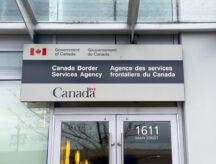
Canada’s Immigration Minister shares responsibility for IRPA with the Minister of Public Safety, who is also the head of the Canada Border Services Agency. This means the two departments frequently intersect and are both involved in the immigration process.
The Act covers almost every aspect of Canada’s immigration system including how applications are submitted, program requirements, ensuring that immigration policies are geared toward strengthening Canada’s economy, reuniting families, and protecting national security.
Discover if You Are Eligible for Canadian Immigration
Other departments are also involved in processing or completing immigration applications. For example, Employment and Social Development Canada (ESDC) plays a key role in the Temporary Foreign Worker Program (TFWP).
IRCC’s role in immigration
IRCC is the main government department involved in evaluating an immigration application.
It ensures that applicants are eligible for their chosen program and that applications are completed correctly and truthfully.
The department also sets annual immigration targets for new permanent resident admissions and processes the facilitation of applications for economic immigration, family class sponsorship, refugees, and asylum claimants. It is also the department that grants citizenship and issues travel documents, such as passports.
Canada Border Services Agency
The legislation in IRPA also includes laws surrounding inadmissibility and maintaining national security.
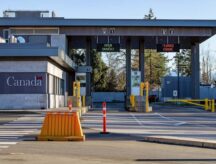
CBSA is responsible for immigration enforcement, such as making decisions regarding admissibility at the applicant’s Port of Entry. To do so, CBSA must work closely with IRCC.
Put another way, IRCC may decide to approve an application, but it is up to CBSA to allow the newcomer into Canada.
This means CBSA evaluates if a newcomer will be a security risk to Canada. They perform background checks that include a criminal record check. If they find the individual has committed an offence in the past, they can be deemed inadmissible, and the newcomer will not be allowed to enter Canada. This could be for anything from a serious felony offence to a DUI charge.
The department also issues security clearances where necessary. IRCC has no control over the processing time of an application reviewed by the CBSA for a security clearance and this can cause processing delays.
Employment and Social Development Canada
Employment and Social Development Canada (ESDC) is responsible for issuing Labour Market Impact Assessments (LMIAs) in the Temporary Foreign Worker Program (TFWP).
Canadian employers sometimes wish to hire Temporary Foreign Workers (TFWs) because they cannot find enough workers in Canada with the necessary skills for a job.
To do so, they need to submit an LMIA to ESDC which decides if hiring TFWs for the position will have a positive, negative, or neutral (no) impact on Canada’s economy. If ESDC decides that the impact will be neutral or positive, the employer will be allowed to hire TFWs.
From here, the TFW must obtain a copy of the LMIA from the employer to submit to with their work permit application to IRCC. Processing time for an LMIA can be anywhere from 9-57 days, depending on the stream. This is in addition to the IRCC service standard for a work permit application.
How do these relationships impact IRCC?
According to a recent report by former Deputy Immigration Minister Neil Yeates, the relationship between IRCC and other governmental departments is overly complicated
“It appears that the current split of responsibilities and accountabilities is not optimal, and this has been the case since the inception of CBSA and remarked upon by previous Deputy Ministers.” the report noted. “This creates unnecessary friction in the IRCC/CBSA relationship and runs the risk of reducing the effectiveness of both organizations.”
He recommended that a review be undertaken of the split of responsibilities between IRCC and CBSA under IRPA be undertaken to help with “rationalizing and streamlining roles and accountabilities.”
Since the report was submitted, IRCC has released a Strategy to streamline how IRCC operates to better serve clients. Of note, IRCC is planning to review and update IRPA to reflect the current demand for immigration. This could mean that the responsibilities of each department under IRPA could shift.

- Do you need Canadian immigration assistance? Contact the Contact Cohen Immigration Law firm by completing our form
- Send us your feedback or your non-legal assistance questions by emailing us at media@canadavisa.com