Arrivals under the Temporary Foreign Worker Program sink to two-year low

Arrivals under Canada’s Temporary Foreign Worker Program (TFWP) have hit a new low, according to the most recent government data.
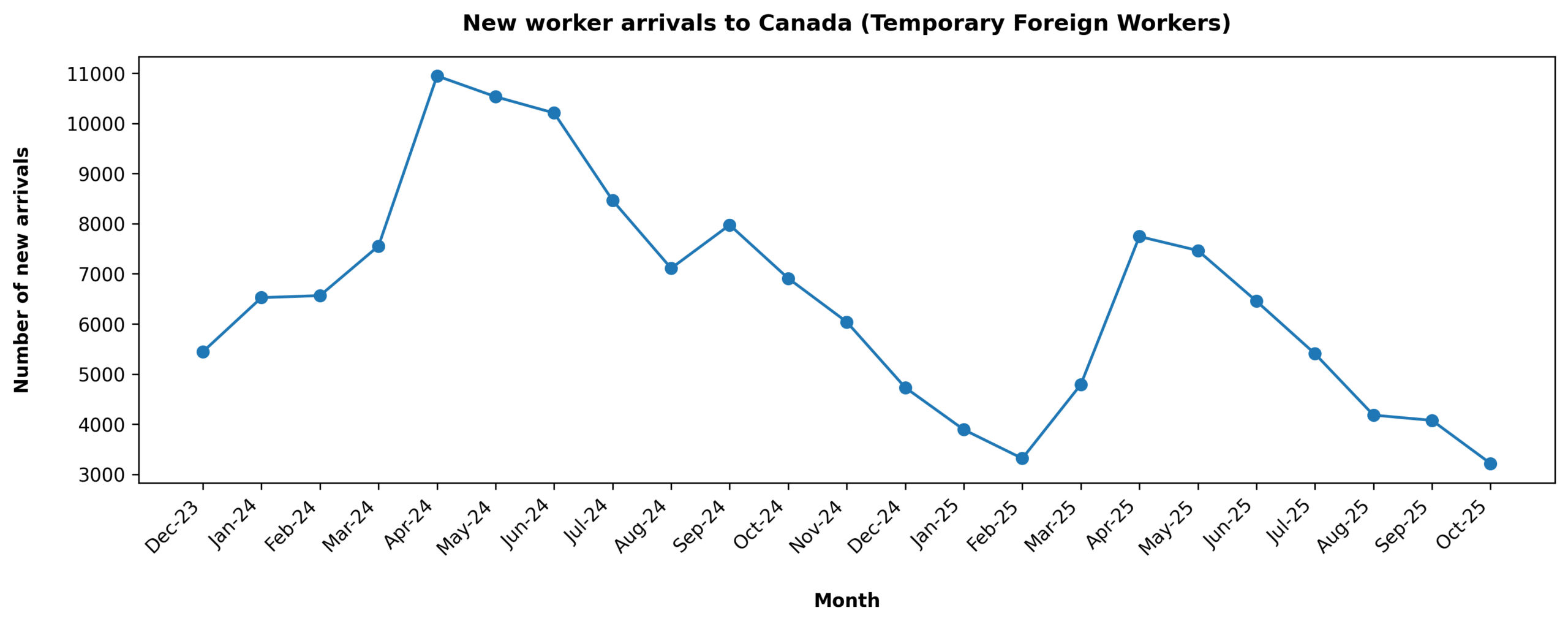
On December 16, IRCC published the most recent monthly arrival data, showing that only 3,215 new TFWP work permit holders arrived in October of 2025.
This is the lowest monthly number of arrivals under the TFWP in the dataset published by IRCC, which begins with December 2023.
The slowdown in new arrivals can largely be attributed to sustained policy efforts by the federal government, including a moratorium on low-wage LMIA application processing, raising eligible wage thresholds for applications, and a reduction in overall TFWP levels.
Schedule a Free Work Permit Consultation with the Cohen Immigration Law Firm
New lows for TFWP arrivals
After a brief spike in the earlier part of 2025 (much of which can be accounted for by seasonal hiring under the program), arrivals under the TFWP have continued to trend downwards from a high in May of 2024:
What has caused the drop in TFWP arrivals?
Over the last two years, the TFWP has come under fire, with accusations of contributing to suppressed wages in a tightening labour market, as well as exacerbating demand on Canadian housing and social services.
In September of 2025, Canada’s Conservative Party called for the abolition of the TFWP, blaming the program for issues such as high youth unemployment and a soft labour market.
Policies implemented by Canada’s federal government as far back as July 2024 have greatly reduced the number of new arrivals under the TFWP:
- Blocking both applications and renewals of low-wage TFWP work permits in regions with an unemployment rate of 6% or higher;
- Boosting the wage threshold for the high-wage stream of the TFWP;
- Lowering the employer workforce cap; and
- Limiting the availability of spousal open work permits (SOWPs) to spouses of TFWP work permit holders working in highly skilled or select in-demand skilled occupations.
The federal government’s latest annual Immigration Levels Plan sets a target of 60,000 new arrivals under the TFWP for 2026, a 27% cut from the target of 82,000 under last year’s plan.
Declines under the International Mobility Program (IMP) and the international student program.
The downtrend in TFWP arrivals dovetails with the decrease in arrivals under Canada’s other major work permit program, the International Mobility Program (IMP), and the decrease in arrivals of international students.
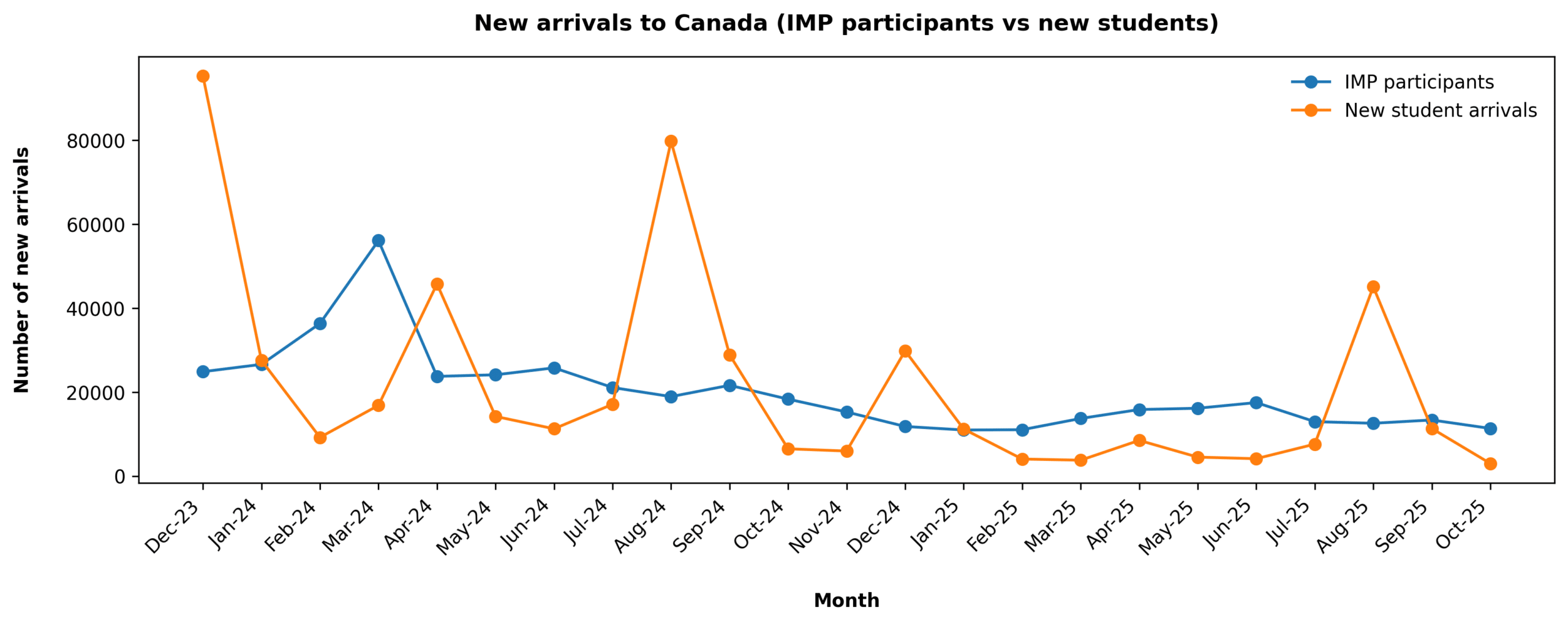
October also represented the two-year low for the arrival of new international students.
Schedule a Free Work Permit Consultation with the Cohen Immigration Law Firm

- Do you need Canadian immigration assistance? Contact the Contact Cohen Immigration Law firm by completing our form
- Send us your feedback or your non-legal assistance questions by emailing us at media@canadavisa.com